Visceral Mobilization: How Treating Internal Organ Mobility Eases Pain
Stubborn low-back, abdominal, or pelvic pain that won't budge? Visceral mobilization addresses restricted organ and fascial movement. How it works in Reno.
You’ve stretched. You’ve strengthened your core. You’ve foam-rolled, you’ve rested, maybe you’ve had months of standard physical therapy, and the deep ache in your low back, the pulling across your abdomen, or that nagging pelvic discomfort still hasn’t let go. When pain ignores all the “right” treatment, it’s worth asking a different question: is the problem really in the muscle and joint you keep treating, or in something connected to it that nobody has looked at?
For a lot of people in Reno, the missing piece is how their internal organs move. Your liver, intestines, kidneys, and bladder aren’t static, they glide, slide, and shift against one another and against the muscles and connective tissue around them with every breath and every step. When that movement gets restricted by old scar tissue, surgery, inflammation, or chronic tension, the body compensates. The result can show up far away as back pain, abdominal tightness, or pelvic dysfunction. Visceral mobilization is the hands-on technique designed to find and release those restrictions.
What is visceral mobilization?
Visceral mobilization (often called visceral manipulation) is a precise, very gentle form of manual therapy that targets the movement of your internal organs and the fascia (connective tissue) that surrounds and suspends them. It was developed by French osteopath Jean-Pierre Barral, and it’s taught and certified through the Barral Institute.
The core idea is simple: free movement inside the body matters, and any restriction can affect how you feel and function. As the Barral Institute describes it:
The treatment is a gentle compression, mobilization, and elongation of the soft tissues. … The purpose of VM is to re-create, harmonize, and increase proprioceptive communication in the body to enhance its internal mechanism for better health.
, The Barral Institute, “Therapeutic Value of Visceral Manipulation”
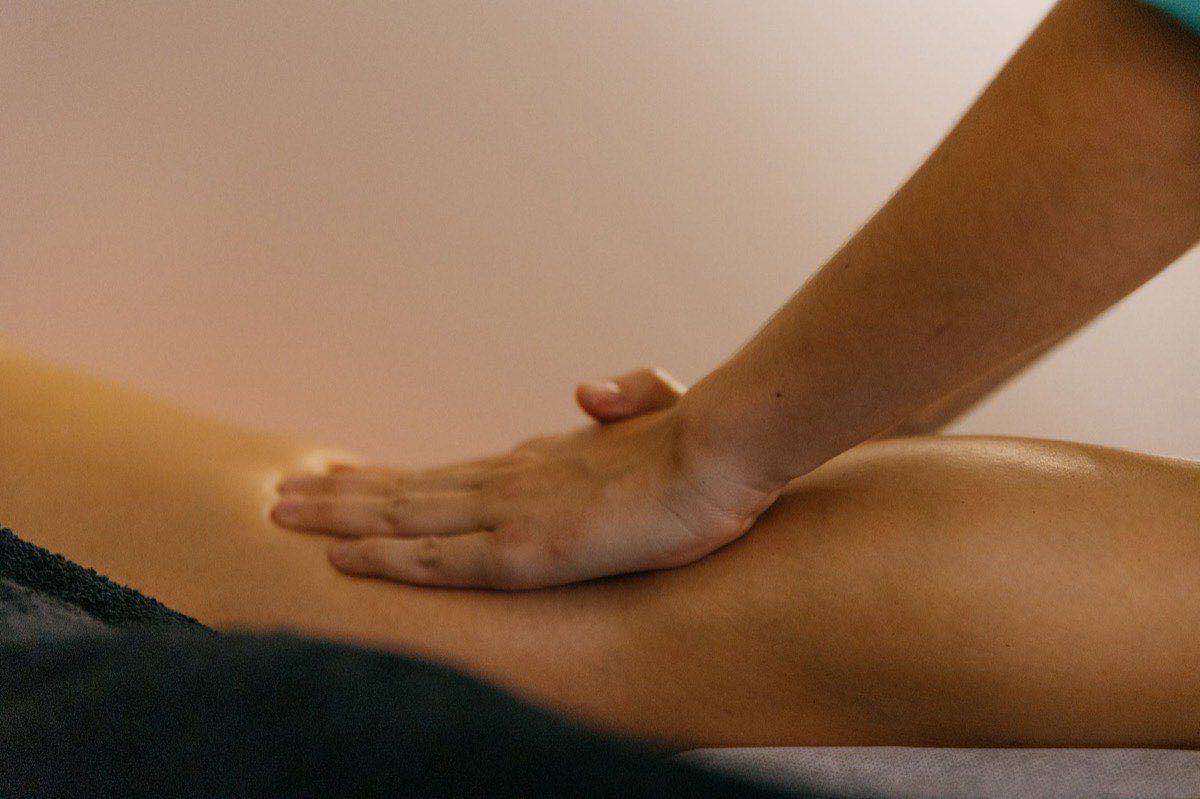
In plain terms: your therapist uses light, specific contact to encourage organs and their connective tissue to glide normally again. There’s no cracking, no forceful thrust, and usually no pain during the work, most patients describe it as subtle, sometimes barely perceptible pressure. The skill is in the listening hands, not the force.
How restricted organ mobility turns into pain
This is where visceral mobilization stops sounding abstract and starts making sense for your back or pelvis.
Your organs are anchored by ligaments and fascia to your spine, ribs, diaphragm, and pelvis. When an organ loses its normal mobility (say, after abdominal or pelvic surgery, a C-section, repeated infections, bouts of constipation, or long-standing inflammation) it pulls on those anchors. Your nervous system then ramps up tension in nearby muscles to protect the area, and you start guarding, shifting posture, and loading your spine unevenly. Over time that low-grade tug-of-war becomes chronic low back pain, abdominal tightness, or pelvic discomfort that doesn’t respond to exercise alone, because the exercise was never addressing the actual restriction.
That’s why visceral mobilization is so often used alongside more familiar manual therapy. The most relevant research on low back pain reflects this combined approach. A 2019 randomized, double-blind controlled trial published in the Journal of Chiropractic Medicine tested visceral manipulation added to conventional physical therapy in people with chronic low back pain and visceral dysfunction. The authors reported:
Significant reductions were found in the experimental group for lumbar mobility and specific functionality in comparison with the control group (P < .05).
: Santos et al., Journal of Chiropractic Medicine (2019), via PubMed
A few honest words about the evidence, because you deserve them: this was a small, preliminary study, and a systematic review of the literature concluded that visceral manipulation may reduce non-specific low back pain in the short term, but those findings rest on a limited number of low-to-moderate quality studies. Visceral mobilization is a promising tool, especially as part of a broader hands-on plan, not a miracle cure. We’ll always be straight with you about what it can and can’t do.
What visceral mobilization helps with
In our Reno practice, we most often turn to visceral mobilization when the pain pattern doesn’t add up from a purely muscle-and-joint perspective. It’s frequently considered for:
- Chronic low back pain that hasn’t improved with strengthening, stretching, or standard PT
- Abdominal tightness or pulling, including restrictions following abdominal or pelvic surgery, C-sections, or scar tissue
- Pelvic-region discomfort tied to fascial restriction
- Postural patterns and recurring tension that keep returning no matter how much you mobilize the obvious muscles
- Digestive-related discomfort that travels into the back
The Barral Institute notes that visceral manipulation is intended to influence musculoskeletal, vascular, nervous, urogenital, respiratory, digestive, and lymphatic systems, a reminder of how interconnected these structures are. For most of our patients, though, the headline is straightforward: when we restore mobility to a restricted organ or its fascia, the muscle that was working overtime to protect it can finally relax.
What a concierge visit looks like at Healing Hands
Here’s the part that makes this technique actually work the way it’s supposed to: time and attention. Visceral mobilization depends on a therapist palpating subtle forces and listening to tissue, something that’s nearly impossible to do well in a rushed, double-booked clinic.
At Healing Hands Physical Therapy and Bodywork, every visit is a full hour, one-on-one, with Dr. Jamie Pribyl (PT, DPT, MTC): never handed off to an aide. A typical session starts with a thorough assessment of how you move, breathe, and where your restrictions actually live. From there, Dr. Pribyl uses gentle, specific contact to evaluate and mobilize the organs and fascia involved, and then weaves in complementary hands-on work (joint mobilization, soft-tissue and myofascial release, and other manual techniques) so the whole region moves better, not just one piece of it. Because it’s concierge care, the plan is adjusted in real time based on what your tissue tells us that day, not a fixed protocol set by an insurer.
If you’re in Reno, Sparks, or anywhere across the Truckee Meadows, you can learn more about how we serve the area on our Reno page.
The cash-pay value, and how to start
Healing Hands is an out-of-network, cash-pay practice, and that’s a deliberate choice. Insurance contracts dictate how much time you get and how care is delivered, which is exactly the wrong setup for a subtle, hands-on technique like visceral mobilization. By stepping outside those contracts, Dr. Pribyl can give you the full, uninterrupted hour the work actually requires.
The result is often fewer visits overall. Instead of a dozen rushed, partial sessions, you get focused hours that address the real driver of your pain, which for many patients means resolving something that months of conventional PT never touched. We’re happy to provide documentation you can submit to your insurer for possible out-of-network reimbursement or HSA/FSA use.
If stubborn low-back, abdominal, or pelvic pain has outlasted everything else you’ve tried, visceral mobilization may be the perspective your treatment has been missing. Call Healing Hands at (775) 452-4471 to talk through your symptoms and find out whether this approach is a good fit for you.
Frequently Asked Questions
Does visceral mobilization hurt? No. It’s one of the gentlest manual therapies there is, light, specific contact rather than forceful pressure or thrusting. Most patients describe it as subtle, and many barely feel the work as it’s happening.
Is visceral mobilization the same as a deep abdominal massage? Not at all. Massage works broadly on muscle. Visceral mobilization is a precise, trained technique aimed at the mobility of specific organs and their connective tissue, guided by careful palpation of how those structures move.
How many sessions will I need? It depends on your history and how long-standing the restriction is. Because each visit is a full hour of focused, one-on-one care, many people need fewer total sessions than they’d expect from standard PT. Dr. Pribyl will give you an honest estimate after your first assessment.
Is there strong scientific proof it works? The evidence is promising but still developing. Studies suggest visceral manipulation, especially combined with conventional physical therapy, can improve low-back mobility and function in the short term, though the research base is small and of modest quality. We use it as one tool within a broader hands-on plan, not a stand-alone cure.
Do you take my insurance? Healing Hands is a cash-pay, out-of-network practice. We provide detailed documentation you can submit for possible out-of-network reimbursement, and visits are typically HSA/FSA eligible.
Sources
- The Barral Institute: Therapeutic Value of Visceral Manipulation: https://www.barralinstitute.com/courses/vm
- The Barral Institute: Jean-Pierre Barral, DO: https://www.barralinstitute.com/about/jean-pierre-barral
- Santos LV, et al. Active Visceral Manipulation Associated With Conventional Physiotherapy in People With Chronic Low Back Pain and Visceral Dysfunction (RCT), Journal of Chiropractic Medicine, 2019, PubMed: https://pubmed.ncbi.nlm.nih.gov/31372099/
- Is visceral manipulation beneficial for patients with low back pain? A systematic review, International Journal of Osteopathic Medicine (ScienceDirect): https://www.sciencedirect.com/science/article/abs/pii/S1746068919300112