StemWave Shockwave Therapy: How Acoustic Wave Treatment Works
How StemWave acoustic shockwave therapy in Reno treats tendinopathy, plantar fasciitis, and chronic pain, the science and what a visit looks like.
You’ve stretched it. You’ve rolled it. You’ve rested it, iced it, and laced your shoes a little tighter. But that heel pain with your first steps in the morning, or that nagging ache in your Achilles, elbow, or shoulder, keeps coming back. When a tendon or fascia problem has dragged on for months, it usually isn’t because you haven’t tried, it’s because chronic soft-tissue injuries heal slowly, and sometimes they stall out entirely.
That’s exactly the situation StemWave shockwave therapy is built for. If you’ve been searching for StemWave shockwave therapy in Reno, here’s a clear, honest explanation of what acoustic wave treatment actually is, how it helps the specific problems you’re dealing with, and what it’s like to be treated for it one-on-one at Healing Hands.
What is StemWave (shockwave) therapy?
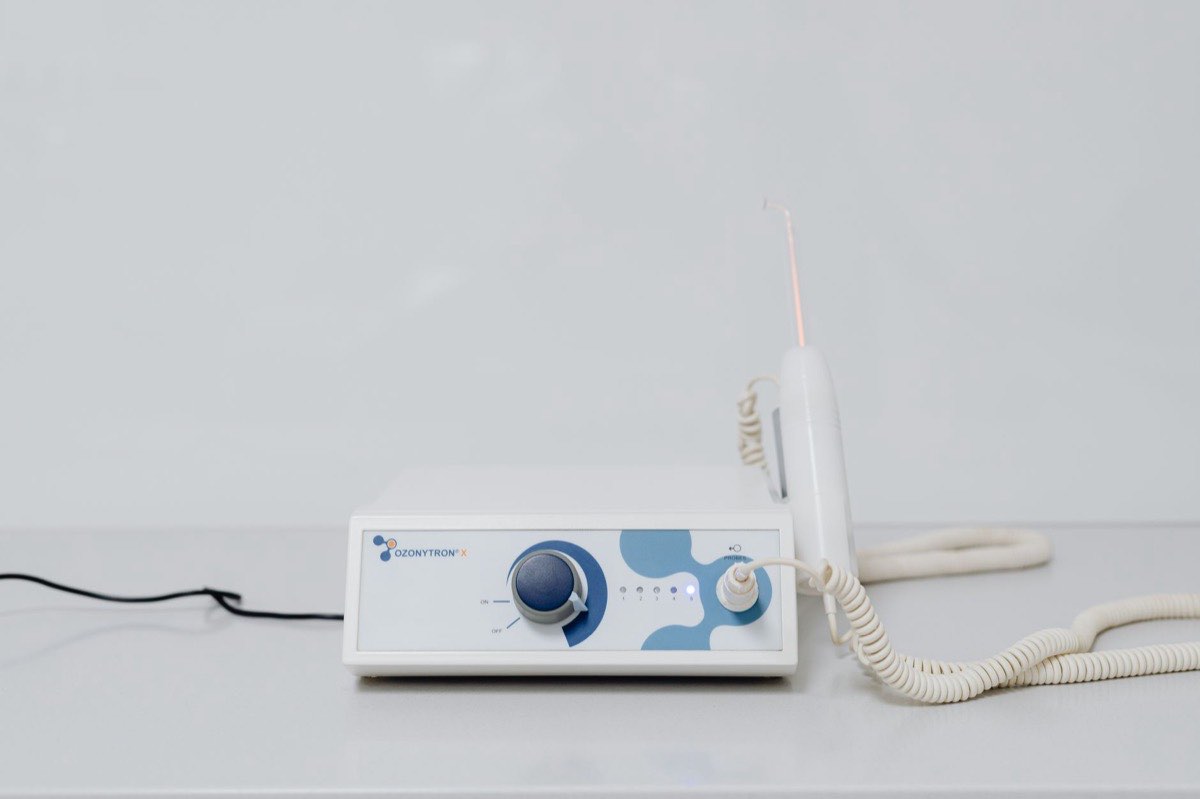
StemWave is a brand of extracorporeal shockwave therapy, often shortened to ESWT. “Extracorporeal” simply means the energy is generated outside your body and delivered through the skin, nothing is injected, and nothing is cut. A handpiece is placed against the painful area, and it sends pulses of acoustic (sound) energy down into the injured tissue.
These aren’t electrical shocks, despite the name. They’re mechanical pressure waves, the same family of physics as the ultrasound you’d recognize from imaging, but delivered as higher-energy pulses focused on a specific spot. Cleveland Clinic describes the treatment plainly:
“SWT is an intervention that stimulates the body’s natural healing process. Additionally, SWT has been shown to have a direct effect on local nerve endings resulting in a decrease in pain.”
: Cleveland Clinic, Shockwave Therapy
That two-part effect (kick-starting healing and calming the nerves carrying your pain signal) is why people often feel both short-term relief and longer-term improvement.
How acoustic waves actually help your tissue heal
Here’s the part that makes shockwave different from a treatment that only masks pain. When the acoustic pulses pass through a stalled, chronically injured tendon or fascia, they create a controlled mechanical stress that essentially “wakes up” the healing response your body never finished.
Researchers studying ESWT have documented several biological effects:
- New blood vessel growth (neovascularization). Chronic tendons are often poorly supplied with blood, which is part of why they don’t heal. Shockwaves stimulate the formation of new microvessels, improving circulation to the injured area.
- Growth-factor and cell signaling. In a review in the Journal of Orthopaedic Surgery and Research, researcher Ching-Jen Wang noted that “extracorporeal shockwave promotes bone marrow stromal cell growth and differentiation toward osteo-progenitors associated with TGF-β1 and VEGF induction”, in plain terms, it switches on the signals and cells your body uses to rebuild tissue.
- Reduced pain signaling. As Cleveland Clinic notes above, the waves also act directly on local nerve endings to turn down the pain.
The result is a treatment that targets the cause of a stubborn injury (the failed healing) rather than just numbing the symptom.
The pain problems StemWave is best for
Shockwave therapy has the strongest track record with chronic soft-tissue conditions, especially those involving tendons and their attachments to bone. Cleveland Clinic notes it is “primarily applied to chronic conditions, particularly those affecting medium to large sized tendons and their insertions on bone.” For this practice, that translates to:
Tendinopathy
Tendinopathy is the modern term for a degenerating, painful tendon, think Achilles tendinopathy, tennis or golfer’s elbow, jumper’s knee (patellar tendinopathy), or a cranky rotator-cuff tendon at the shoulder. These are classic targets for shockwave, because the therapy directly addresses the poor blood supply and stalled repair that keep tendons hurting.
Plantar fasciitis
That sharp, stabbing heel pain on your first steps in the morning is the hallmark of plantar fasciitis, and it’s one of the most studied uses of ESWT. A 2024 systematic review and meta-analysis in the European Journal of Physical and Rehabilitation Medicine by Lippi and colleagues concluded:
“ESWT seems to be an effective and tolerable treatment for PF, albeit the peculiarity of parameters might affect both the efficacy in pain relief and the adherence to the treatment.”
: Lippi et al., European Journal of Physical and Rehabilitation Medicine, 2024
In other words, the evidence supports shockwave for stubborn heel pain, and it shows that getting the settings right matters, which is where having a doctor of physical therapy run the treatment makes a real difference.
Chronic pain that hasn’t responded to other care
If you’ve already done a round of traditional therapy, tried rest and anti-inflammatories, and the problem is still there, shockwave is often considered precisely because the usual conservative steps didn’t finish the job. It’s a non-invasive option to try before escalating to injections or surgery.
What a concierge StemWave visit looks like at Healing Hands
This is where treatment at Healing Hands Physical Therapy and Bodywork differs from a high-volume clinic. At a typical insurance-based practice, a device like shockwave can become a “park it and walk away” modality applied by an aide. Here, Dr. Jamie Pribyl (PT, DPT, MTC) treats you one-on-one for a full hour, every visit.
A StemWave session in our Reno clinic generally looks like this:
- A real evaluation first. Before any acoustic waves, Dr. Pribyl examines the area by hand, confirms shockwave is appropriate, and pinpoints exactly where to treat. ESWT works best when it’s aimed precisely, and that’s a skill, not a button.
- The treatment itself. The handpiece is moved over the injured tissue for several minutes. You’ll feel a firm tapping or pulsing sensation. It’s well tolerated, requires no numbing or downtime, and you walk out and resume your day.
- Hands-on care around it. Because you have the whole hour, shockwave isn’t the only thing that happens. Dr. Pribyl layers in manual therapy, soft-tissue work, and movement retraining so the freshly stimulated tissue is supported by better mechanics, addressing why the tendon got overloaded in the first place.
- A plan, not a punch card. Most people do a short series of sessions spaced out over a few weeks, with targeted home strategies in between.
You can read more about how we deliver this on the StemWave service page, and about serving patients across the area on our Reno page.
The cash-pay value: fewer, better visits
Healing Hands is an out-of-network, cash-pay practice, and for a treatment like shockwave, that model is a genuine advantage. Because every visit is a full, focused hour with the doctor (not a few minutes of device time wedged between other patients), the care is more precise and people often need fewer total sessions than a high-volume schedule would book.
Pricing is known up front, there are no surprise denied-claim bills, and we can provide a superbill: an itemized receipt you can submit to your insurer for possible out-of-network reimbursement, depending on your plan. When you weigh it against months of recurring pain, rushed visits, or the cost and risk of injections and surgery, a short series of targeted shockwave sessions is often the better value.
Ready to find out if StemWave is right for your tendon or heel pain? Book an appointment or call or text (775) 452-4471, and we’ll talk through whether you’re a good candidate before you commit to anything.
Frequently Asked Questions
Does StemWave shockwave therapy hurt? Most people describe it as a firm tapping or pulsing pressure rather than pain. The intensity can be adjusted to your comfort, and because it’s non-invasive, there’s no numbing required and no downtime, you can drive yourself home and return to normal activity the same day.
How many sessions will I need? It varies by how chronic and severe the problem is, but a typical course is a small series of sessions spread over a few weeks. Because each visit at Healing Hands is a full hour of one-on-one care, many people need fewer total visits than a high-volume clinic would schedule. Dr. Pribyl will give you a realistic estimate after evaluating you.
Is shockwave therapy backed by research? Yes, extracorporeal shockwave therapy is well studied for chronic tendon problems and plantar fasciitis. A 2024 systematic review and meta-analysis found it to be an effective and tolerable treatment for plantar fasciopathy, and Cleveland Clinic uses it for conditions including plantar fasciitis and Achilles tendinopathy. As with any treatment, results depend on appropriate use and correct settings.
Is StemWave the same as surgery or injections? No. StemWave is non-invasive and non-surgical, nothing is cut, and nothing is injected. It’s frequently chosen as a conservative option to try before escalating to cortisone injections or surgery for stubborn tendon and heel pain.
Can I get StemWave therapy in Reno without using insurance? Yes. Healing Hands is a cash-pay, out-of-network practice in Reno. Pricing is transparent and known up front, and we can provide a superbill you may submit to your insurer for possible out-of-network reimbursement, depending on your plan.
Sources
- Cleveland Clinic: Shockwave Therapy: https://my.clevelandclinic.org/canada/services/shockwave-therapy
- Lippi L, et al. “Efficacy and tolerability of extracorporeal shock wave therapy in patients with plantar fasciopathy: a systematic review with meta-analysis and meta-regression.” European Journal of Physical and Rehabilitation Medicine, 2024 (PMC): https://pmc.ncbi.nlm.nih.gov/articles/PMC11561739/
- Wang CJ. “Extracorporeal shockwave therapy in musculoskeletal disorders.” Journal of Orthopaedic Surgery and Research, 2012 (PMC): https://pmc.ncbi.nlm.nih.gov/articles/PMC3342893/
- PubMed, “Efficacy and tolerability of extracorporeal shock wave therapy in patients with plantar fasciopathy” (citation): https://pubmed.ncbi.nlm.nih.gov/39257331/
Reviewed by Dr. Jamie Pribyl, PT, DPT, MTC.