Muscle Energy Technique: A Gentle Way to Restore Joint Motion
Muscle Energy Technique uses your own gentle muscle contractions to ease stiff joints and reduce low back, hip, and neck pain. Concierge PT in Reno, NV.
You wake up, swing your legs out of bed, and your low back locks. Or you check your blind spot in the car and your neck refuses to turn that last few degrees. Maybe it’s a hip that feels jammed every time you climb stairs. Stiff, restricted joints are one of the most common reasons people end up searching for hands-on help, and they’re also one of the most treatable.
If you’ve been looking for muscle energy technique physical therapy in Reno, this guide explains what the technique actually is, how it gently restores motion to the low back, hip, and neck, and what a full-hour concierge visit at Healing Hands Physical Therapy and Bodywork looks like.
First, the problem: why joints get “stuck”
When a joint stops moving the way it should, it’s rarely the bone’s fault. More often, the muscles that cross the joint have shortened, tightened, or gone into a protective guarding pattern after an injury, a long workday at a desk, or even just sleeping wrong. That muscle imbalance pulls the joint slightly out of its normal resting position and limits how far it can glide.
The result is a familiar combination: stiffness, reduced range of motion, and an ache that flares at the edge of what the joint will allow. Low back pain is one of the most common versions of this story. According to the American Physical Therapy Association’s ChoosePT:
About 25% of people in the United States report having had low back pain within the past three months.
The good news is that this kind of motion restriction usually responds well to skilled, hands-on physical therapy, and Muscle Energy Technique is one of the gentlest tools we have for it.
What is Muscle Energy Technique?
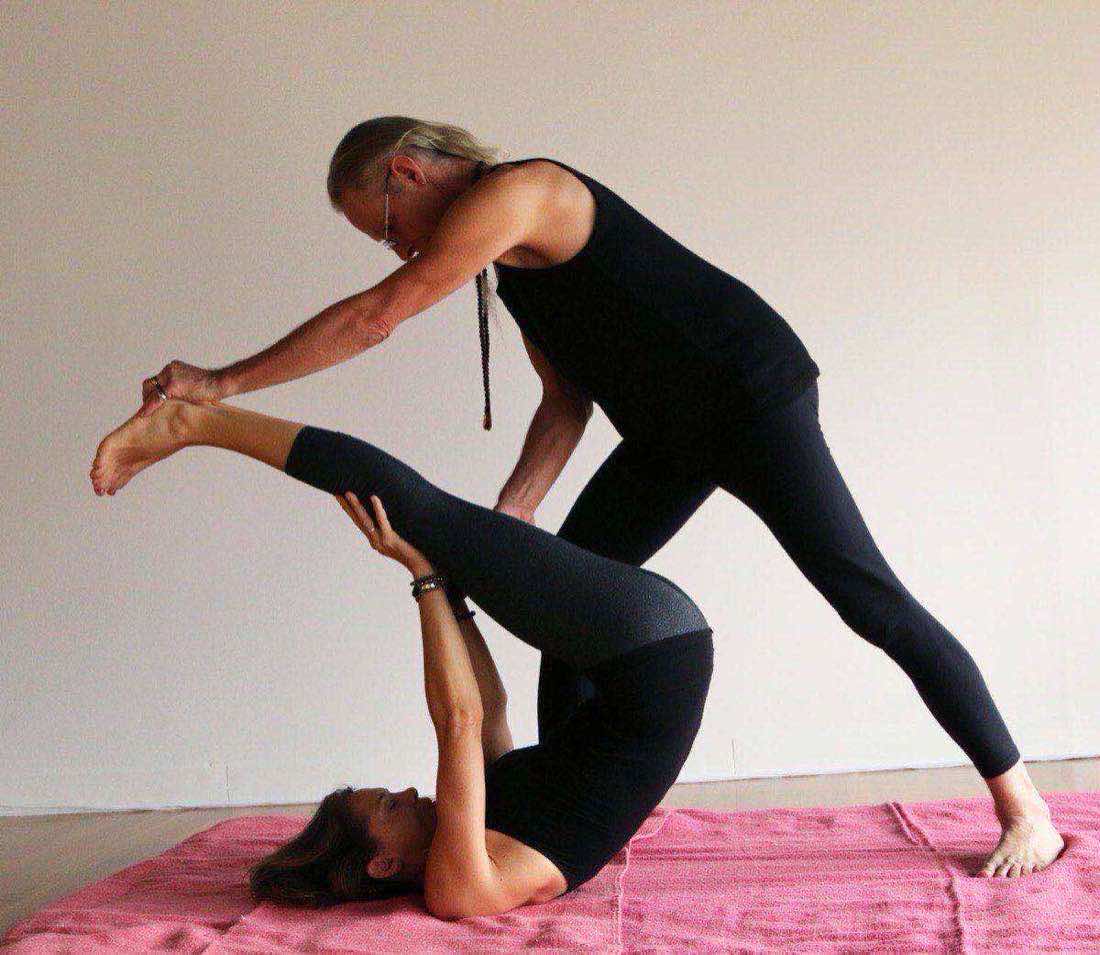
Muscle Energy Technique (MET) is a hands-on manual therapy approach where you do part of the work. Instead of the therapist forcing a stiff joint into motion, your therapist positions the joint right at the edge of its restricted range and asks you to gently push against a fixed resistance (usually at about 20% of your full effort) for a few seconds.
That light contraction does something clever: when you relax afterward, the muscle releases a little further than before, and the therapist gently takes the joint into its new, larger range. Repeat that a few times and the joint glides more freely, the muscles let go, and pain eases.
Two things make MET especially appealing:
- It’s gentle. There’s no high-velocity “cracking” or forceful thrust. Because you control the contraction, you’re never pushed past what feels safe. This makes MET a good fit for people who are nervous about aggressive manipulation, who are recovering from a flare-up, or who simply prefer a calmer approach.
- It’s active, not passive. You participate in your own treatment, which tends to produce a more lasting change than passively being stretched.
MET is one of several skilled, hands-on methods used in orthopaedic manual physical therapy. The International Federation of Orthopaedic Manipulative Physical Therapists defines that field this way:
Orthopaedic Manual Physical Therapy is a specialised area of physiotherapy / physical therapy for the management of neuro-musculoskeletal conditions, based on clinical reasoning, using highly specific treatment approaches including manual techniques and therapeutic exercises.
That phrase (highly specific treatment approaches based on clinical reasoning) is exactly what MET is. The technique is only as good as the assessment behind it, which is why it belongs in the hands of a trained manual therapist.
How MET helps your low back, hip, and neck
The mechanics are similar everywhere, but here’s how MET applies to the three areas people in Reno most often ask about:
Low back. When the small joints of the lumbar spine or the pelvis (especially the sacroiliac joint) get restricted, the back muscles guard and you feel locked up. MET is used to gently rebalance the muscles around the pelvis and lumbar spine, restore even motion side to side, and reduce that protective tension. A 2023 systematic review in the Bulletin of Faculty of Physical Therapy found that in patients with chronic low back pain, MET helped reduce pain intensity and disability and improve lumbar range of motion.
Hip. A tight, restricted hip (common in runners, cyclists, golfers, and anyone who sits a lot) can make stairs, squatting, and getting out of a car uncomfortable. MET targets the deep hip rotators and the muscles around the pelvis to free up rotation and flexion, which often takes strain off the low back at the same time, since the hip and lumbar spine work as a team.
Neck. For the stiff, achy neck that won’t turn far enough to check your blind spot, MET gently lengthens the guarding muscles on the restricted side and restores rotation. A 2025 randomized controlled trial in the Pakistan Journal of Medical Sciences concluded:
Muscle energy technique along with conventional physical therapy is more effective in decreasing neck pain and improving cervical ROM compared to conventional physical therapy alone in individuals with chronic mechanical neck pain.
, Hussain G, et al., Pakistan Journal of Medical Sciences, 2025
An honest note on the evidence. Research on MET is still maturing. A Cochrane review (Franke et al., 2015) found that “the quality of research related to testing the effectiveness of MET is poor” and called for larger, better-designed studies. That’s why we never rely on a single technique. MET is most powerful as one part of a complete hands-on plan (combined with joint mobilization, soft-tissue work, and targeted exercise) chosen for your specific restriction, not applied off a script.
What a concierge MET visit looks like at Healing Hands
This is where the Healing Hands model is different. In a typical high-volume clinic, you might get a few minutes of hands-on time before being handed a sheet of exercises. Here, every visit is a full hour, one-on-one, with Dr. Jamie Pribyl (PT, DPT, MTC): a doctor of physical therapy with advanced manual therapy certification.
A first visit usually looks like this:
- A real evaluation. We watch how you move, find exactly which joints are restricted and which muscles are guarding, and figure out why, because a stiff neck and a tight hip are often connected.
- Hands-on treatment. MET is applied precisely to the joints that need it, often alongside joint mobilization, soft-tissue and myofascial work, or dry needling, adjusted in real time based on how your body responds.
- A short, targeted home plan. After the hands-on work creates relief, you leave with a few specific movements to hold your gains, not a generic gym program.
Because we serve patients throughout the area (see our Reno service area) and because each visit is unhurried, most people need fewer total visits than the two-to-three-per-week schedule a high-volume clinic books.
The cash-pay value
Healing Hands is an out-of-network, cash-pay practice. A session costs more per visit than a typical insurance copay, but because every visit is a focused, hands-on hour with your doctor, people often need far fewer appointments, which keeps the overall cost competitive. There are no surprise denied-claim bills, your price is known up front, and we can provide a superbill you can submit to your insurer for possible out-of-network reimbursement.
You can learn more about how we use this technique on our Muscle Energy Technique service page.
Ready to get that joint moving again? Book an appointment or call or text (775) 452-4471. We’re happy to talk through whether MET and hands-on PT are the right fit for your back, hip, or neck.
Frequently Asked Questions
Does Muscle Energy Technique hurt? No. MET uses light, controlled muscle contractions at roughly 20% of your full effort, with no forceful thrusts or “cracking.” Most people find it gentle and relaxing. You stay in control the whole time, so the joint is never pushed past what feels safe.
How is MET different from regular stretching? In passive stretching, the therapist does all the work while you relax. MET is active, you gently contract the muscle yourself, which triggers it to release further when you relax. That cooperation between you and the therapist tends to restore range of motion more effectively than stretching alone.
How many sessions will I need? It depends on how long the restriction has been there and what’s causing it, but because each Healing Hands visit is a full hands-on hour, many people need fewer visits than a high-volume clinic schedules. Dr. Pribyl will give you an honest estimate after your first evaluation.
Can MET help if I want to avoid surgery or injections? Often, yes, for mechanical stiffness and motion loss in the back, hip, or neck, restoring normal joint movement with hands-on care is a reasonable thing to try first. If your situation needs more than PT can offer, we’ll tell you honestly and help you find the right next step.
Do you take my insurance? Healing Hands is a cash-pay, out-of-network practice. We don’t bill insurance directly, but we provide a superbill you can submit for possible out-of-network reimbursement, depending on your plan.
Sources
- American Physical Therapy Association, ChoosePT: Physical Therapy Guide to Low Back Pain: https://www.choosept.com/guide/physical-therapy-guide-low-back-pain
- International Federation of Orthopaedic Manipulative Physical Therapists (IFOMPT), OMPT Definition: https://www.ifompt.org/About+IFOMPT/OMPT+Definition.html
- Hussain G, Arsh A, Rehman F, Khan S. Immediate effects of muscle energy technique on pain and range of motion in patients with chronic non-specific neck pain: A randomized controlled trial. Pakistan Journal of Medical Sciences, 2025: https://pmc.ncbi.nlm.nih.gov/articles/PMC12130921/
- Franke H, Fryer G, Ostelo RWJG, Kamper SJ. Muscle energy technique for non-specific low-back pain. Cochrane Database of Systematic Reviews, 2015: https://pubmed.ncbi.nlm.nih.gov/25723574/
- Systematic review: Effectiveness of muscle energy technique on pain intensity and disability in chronic low back patients. Bulletin of Faculty of Physical Therapy, 2023: https://link.springer.com/article/10.1186/s43161-023-00135-w
Reviewed by Dr. Jamie Pribyl, PT, DPT, MTC.