Dry Needling Is NOT Acupuncture: What It Actually Is and How It Works
Dry needling and acupuncture both use thin needles, but they're not the same thing. Here's what dry needling actually does for muscle pain in Reno.
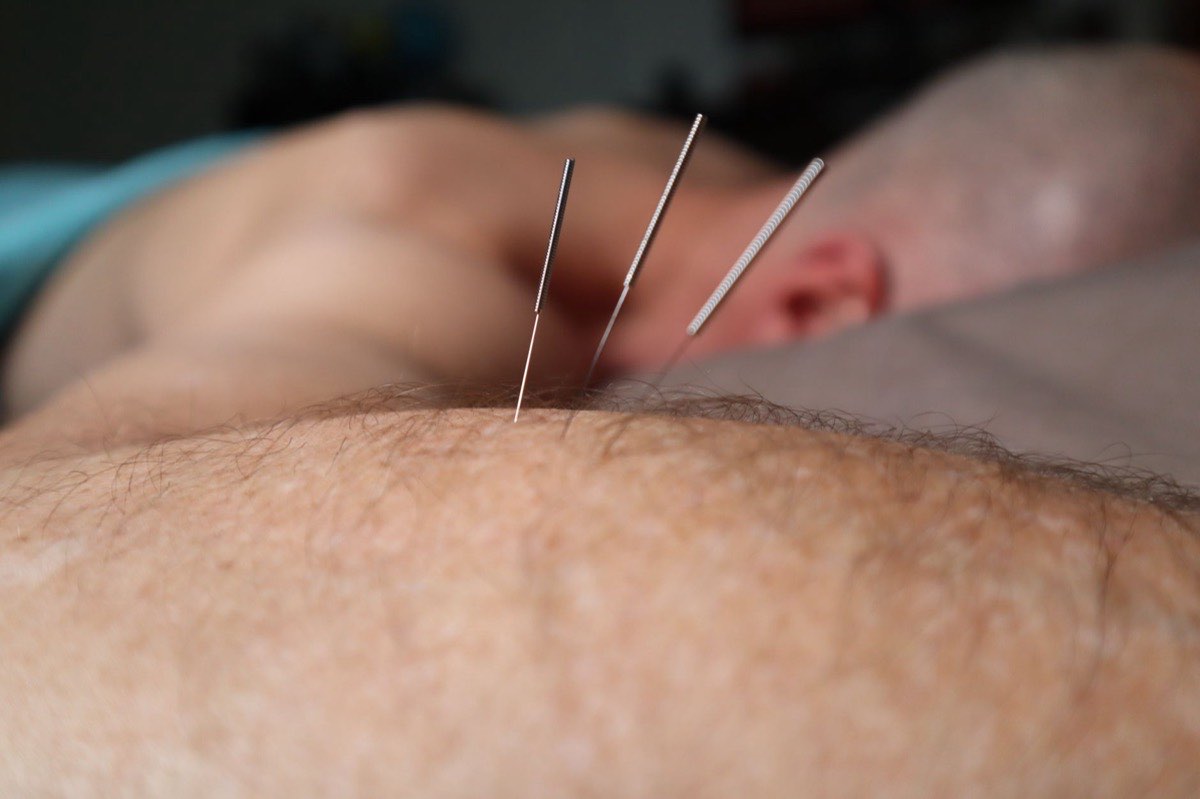
You’ve had a knot in your shoulder for months. It aches at your desk, flares when you sleep on it, and stretching only buys you an hour of relief before it tightens right back up. Someone mentions dry needling, and your first thought is, “You mean acupuncture?”
It’s the single most common question I hear about this treatment, and the answer matters. Because while both dry needling and acupuncture use thin, sterile needles, they come from completely different traditions, target completely different things, and are performed by completely different practitioners. If you’re searching for dry needling vs acupuncture in Reno, here’s exactly what dry needling is, how it actually relieves muscle pain, and what a one-on-one session looks like at Healing Hands.
Same needle, different medicine
Let’s clear up the biggest misconception first. The most authoritative voice on this is the American Physical Therapy Association, through its patient resource ChoosePT:
“Dry needling is not acupuncture. Acupuncture is based on traditional Chinese medicine and can only be performed by acupuncturists. Dry needling is modern Western medicine and is supported by evidence-based research.”
That’s the heart of it. Acupuncture comes from a 2,000-plus-year-old system that maps points along energy meridians, with the goal of balancing the body’s flow of qi. It’s its own discipline, practiced by licensed acupuncturists.
Dry needling is a young, Western, anatomy-based technique. It doesn’t use meridians or energy charts. Instead, a trained physical therapist uses knowledge of muscle, fascia, and nerve patterns to place a needle precisely into a knotted, irritable spot in your muscle (a myofascial trigger point) to get that muscle to release. The word “dry” simply means the needle carries no medication or injection; the needle itself is the treatment.
What dry needling actually is
The Cleveland Clinic describes it plainly:
“Dry needling is a technique that acupuncturists, physical therapists and other trained healthcare providers use to treat musculoskeletal pain and movement issues.”
In practice, I insert a very thin, single-use filament needle through the skin and directly into a trigger point or a tight band of muscle. There’s no syringe, no drug, no stinging burn, most people are surprised by how little they feel on the way in.
How it actually relieves muscle trigger points and chronic pain
To understand why this works, you have to understand the problem it’s solving.
A trigger point is a tight, knotted band within a muscle. It’s the literal knot you feel when you dig your thumb into a stubborn spot in your traps or your calf. These bands don’t just hurt where they sit, they refer pain elsewhere, restrict your range of motion, and quietly drive a lot of the chronic pain that never fully resolves with stretching or rest. As the Cleveland Clinic notes, “Trigger points are knotted, tender areas that develop in your muscles.”
Here’s what the needle does once it reaches that knot:
- It sparks a twitch and a reset. When the needle contacts the trigger point, the muscle often produces a tiny involuntary twitch. That twitch response signals the tight band to contract and then release, a kind of mechanical reset for muscle fibers that have been locked down for weeks or months.
- It restores blood flow. Trigger points are oxygen-starved, congested little zones. Per the Cleveland Clinic, “Stimulating a trigger point with a needle helps draw normal blood supply back to flush out the area and release tension.” Fresh blood flushes out the irritating byproducts that keep the area sensitized.
- It calms an overactive pain signal. By directly interrupting the trigger point, dry needling helps quiet the local nerve activity that’s been amplifying your pain, which is why range of motion often improves immediately after a session.
The goal, in the words of ChoosePT, is simple: “Dry needling can inactivate trigger points to relieve pain or improve range of motion.”
This is exactly why dry needling is so useful for the kinds of stubborn, chronic muscular pain I see most in Reno, desk-bound neck and shoulder tension, runners and hikers with tight calves and IT bands, lifters with locked-up hips, and the persistent low-back tightness that nothing else seems to touch.
Dry needling is one tool, not the whole treatment
Here’s where the concierge part matters. Dry needling is powerful, but it works best as one piece of a larger, hands-on plan, not a standalone gimmick you get and leave. The Cleveland Clinic is explicit that dry needling “is almost always used as part of a larger pain management plan that could include exercise, stretching, massage and other techniques.”
That’s precisely how I practice at Healing Hands Physical Therapy and Bodywork. In a typical insurance clinic, you might get a few rushed minutes of needling before being handed off to an aide. Here, every visit is a full hour, one-on-one, with me: Dr. Jamie Pribyl, PT, DPT, MTC.
A concierge session usually looks like this:
- We find the real culprit. I assess your movement and palpate to locate the trigger points actually driving your pain, which often aren’t where you feel it.
- We needle with intention. I treat the specific points contributing to your symptoms, watching for that twitch response and adjusting in real time.
- We integrate it with hands-on care. I follow the needling with manual therapy, joint mobilization, and targeted movement, so the muscle doesn’t just release, it stays released and you leave moving better.
- You get a plan. You walk out knowing what to do between visits, not just a stack of generic handouts.
The cash-pay value
Healing Hands is an out-of-network, cash-pay practice, and for a treatment like dry needling, that model is a feature, not a drawback. Insurance contracts cap your time and dictate “medically necessary” minutes. By stepping outside them, I can give you the undivided hour that dry needling and manual therapy actually deserve.
For most people that means fewer total visits, because each session does more. You’re paying for a doctor’s full attention and a hands-on hour, not a co-pay that buys you ten minutes and a hand-off. Serving Reno and the surrounding area, Healing Hands keeps pricing transparent and the care personal.
Ready to find out whether dry needling is right for your knot, your neck, or your nagging chronic pain? Call (775) 452-4471 to book a one-on-one session.
Frequently Asked Questions
Is dry needling the same as acupuncture?
No. They use similar thin needles, but they’re different practices. Acupuncture is rooted in traditional Chinese medicine and performed by licensed acupuncturists. Dry needling is a modern, Western, anatomy-based technique performed by trained physical therapists, and it targets muscular trigger points rather than energy meridians.
Does dry needling hurt?
Most people feel little to nothing when the thin needle goes in. When it reaches a trigger point, you may feel a brief cramp or twitch, a sign the knot is releasing. Mild soreness for a day or two afterward is normal and usually means the muscle is recovering.
What conditions does dry needling help with?
It’s most useful for muscle trigger points and chronic musculoskeletal pain, think persistent neck and shoulder tension, low-back tightness, tension headaches, calf and IT-band tightness, and overuse injuries that haven’t resolved with stretching or rest alone.
How many sessions will I need?
It varies by person and problem, but because every visit at Healing Hands is a full hands-on hour, most patients need fewer total sessions than they’d expect from a high-volume insurance clinic. We’ll map out a realistic plan at your first visit.
Can a physical therapist legally perform dry needling in Nevada?
Yes. Dry needling is within the scope of practice for appropriately trained physical therapists in Nevada, and it’s performed using sterile, single-use needles.
Sources
- ChoosePT.com (American Physical Therapy Association), “Dry Needling by a Physical Therapist: What You Should Know”, https://www.choosept.com/health-tips/dry-needling-physical-therapist-what-you-should-know
- Cleveland Clinic, “Dry Needling”, https://my.clevelandclinic.org/health/treatments/16542-dry-needling
- American Physical Therapy Association, “Dry Needling”, https://www.apta.org/patient-care/interventions/dry-needling