Cupping Therapy in Physical Therapy: What It Does and Why Those Marks Appear
How cupping therapy in Reno eases muscle, back, and shoulder tightness, what those round marks really are, and what a concierge PT visit looks like.
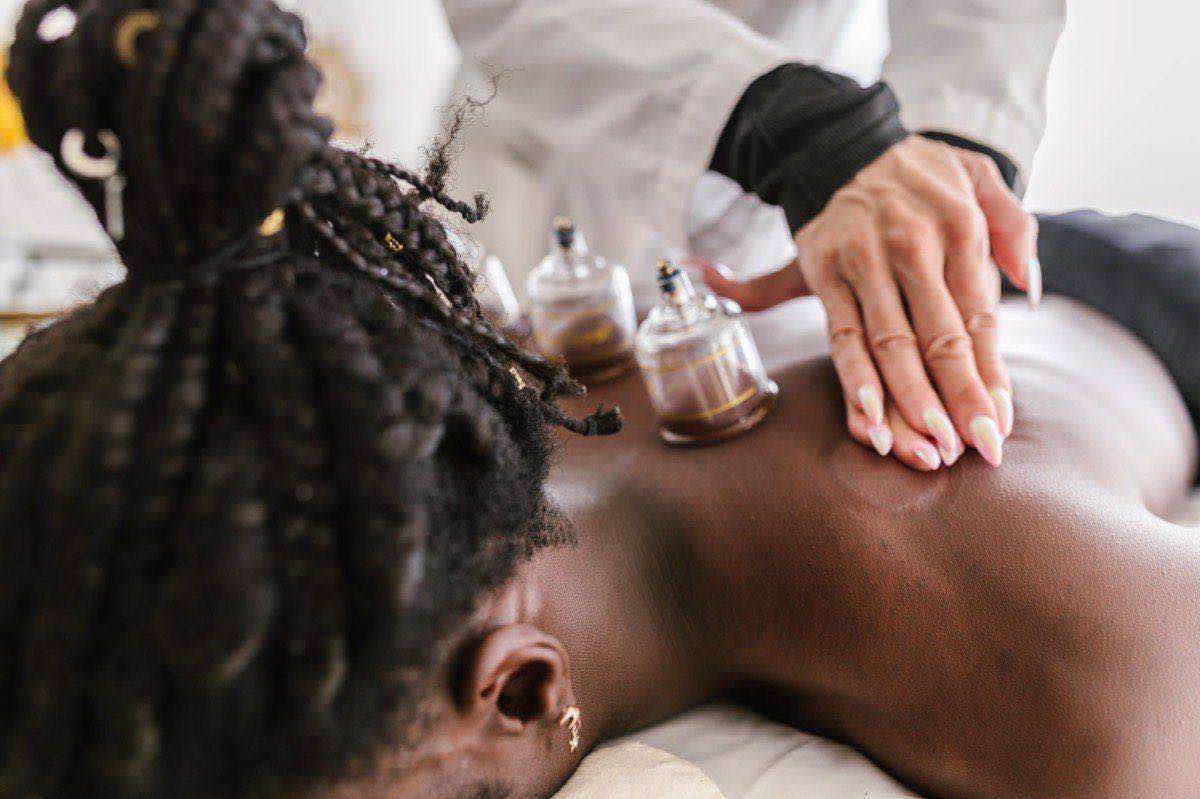
You’ve seen the circular marks, on an Olympic swimmer’s shoulders, on a friend who plays pickleball, maybe on yourself after a treatment. They look dramatic, and the first question almost everyone asks is the same: “Is that a bruise? Did something go wrong?”
If you’re dealing with stubborn muscle tightness, a back that won’t loosen up, or a shoulder that feels locked after weeks at a desk, cupping therapy is one of the most effective hands-on tools we use at Healing Hands Physical Therapy and Bodywork in Reno. Below is a straight, no-hype explanation of what cupping does, exactly how it helps the areas that tend to bother people most, what those marks really are, and what a concierge cupping visit looks like here.
The problem: tight tissue that won’t let go
Muscle tightness isn’t just a feeling, it’s a physical restriction. When the soft tissue and fascia (the connective tissue web that wraps every muscle) get stiff, dehydrated, or stuck down with adhesions, you lose range of motion, blood flow drops, and the area starts protecting itself. That’s the nagging tightness across your upper back after a long week, the band of tension that runs from your neck into your shoulder, or the low-back stiffness that makes bending forward feel like a negotiation.
Stretching alone often doesn’t fix it, because stretching pulls the muscle but doesn’t directly release the fascia layered on top of it. That’s exactly the gap cupping is built to address.
How cupping therapy actually works
Cupping uses suction (not pressure) to treat tissue. A cup is placed on the skin and air is drawn out, creating a vacuum that gently lifts the skin and the fascia underneath up into the cup. It’s the opposite of a deep-tissue massage that presses down; cupping decompresses tissue by pulling up.
The Cleveland Clinic describes the basic mechanism plainly:
“Cupping therapy uses the force of suction to pull blood toward the surface of your skin.”
That lift does a few useful things at once:
- Decompresses the fascia. The negative pressure separates layers of tissue that have stuck together, which can restore glide and motion that stretching can’t reach.
- Draws in fresh blood flow. Lifting the tissue pulls circulation into an area that’s often under-perfused, which supports the body’s natural healing.
- Calms the nervous system locally. The sustained, gentle pull tends to down-regulate the protective “guarding” reflex that keeps tight muscles tight.
In a physical-therapy setting, we often combine the suction with movement, sometimes called myofascial decompression. We place the cups and then have you slowly move the joint or limb, so the fascia is decompressed and mobilized at once. That’s where cupping stops being a passive spa treatment and becomes targeted rehab.
Why those marks appear (and why they’re not what you think)
Here’s the part everyone wants explained. The round discolorations after cupping are not bruises in the way you’d think, and they’re not “toxins” being pulled out, that’s a myth. They come from tiny capillaries near the skin’s surface releasing a little blood under the suction.
Again, from the Cleveland Clinic:
“Although these marks will look like bruises, they’re not true bruises that injure muscle fibers.”
In plain terms: the marks are surface-level capillary response, not damaged muscle. They’re usually painless, they fade on their own in one to two weeks, and their color can actually give your therapist information about how restricted or under-circulated an area was. The darker areas often correspond to the spots that needed the work most.
How cupping helps your specific problem area
Muscle tightness. Cupping is one of the fastest ways to take the edge off generalized tightness, because decompressing the fascia and flooding the area with circulation gives the muscle permission to lengthen. We frequently follow it with hands-on manual therapy and a few targeted movements to lock in the new range.
Back pain. For low- and mid-back tightness, cupping decompresses the thick layers of fascia along the spine that bear the brunt of sitting and lifting. It pairs well with joint mobilization, loosen the soft tissue first, then restore the joint motion.
Shoulder pain. Shoulders are a fascia-heavy, mobility-dependent joint, and cupping around the upper trap, rotator cuff, and shoulder blade can free up the tissue that’s limiting your overhead reach. Combined with movement, it helps restore the range you need to actually use the shoulder.
The evidence here is honest, not overstated. The National Center for Complementary and Integrative Health (part of the NIH) puts it this way:
“Cupping may help reduce pain, but the evidence for this isn’t very strong.”
We agree with that framing. Cupping isn’t magic, and we never sell it as a cure-all. We use it as one tool inside a hands-on treatment plan, and in practice, for the right person with tight, restricted tissue, it works well. A 2020 study in the International Journal of Sports Physical Therapy found that myofascial decompression (cupping) produced a statistically significant improvement in hamstring range of motion after a single treatment, and that patients perceived greater flexibility benefit from cupping than from self-myofascial release.
What a concierge cupping visit looks like at Healing Hands
This is where Reno’s concierge, cash-pay model changes the experience. At a high-volume insurance clinic, cupping might be a few minutes tacked on while the therapist juggles three other patients. Here, you get a full hour, one-on-one, with Dr. Jamie Pribyl (PT, DPT, MTC): every visit.
A typical session looks like:
- A real evaluation. We watch how you move and find why the tissue is restricted, not just where it hurts.
- Hands-on treatment, layered. Cupping is rarely used alone. It’s combined with manual therapy, myofascial release, joint mobilization, and movement, chosen and adjusted in real time based on what your tissue is doing that day.
- Active decompression. When it fits, we add movement under the cups to mobilize the fascia, not just decompress it.
- A plan you can keep. You leave with targeted homework to hold the gains, not a generic exercise sheet.
Because Healing Hands is mobile and concierge, we also serve patients across the area. If you’re searching nearby, see our Reno service area page for details on where and how we treat.
The cash-pay value
We’re an out-of-network, cash-pay practice, and for cupping and hands-on care, that’s a feature, not a drawback. You’re not getting a rushed add-on; you’re getting a full hour of a doctor’s hands and attention, with no insurance contract dictating how much time or which techniques you’re “allowed.” Pricing is known up front, and we can provide a superbill you can submit to your insurer for possible out-of-network reimbursement.
For many people with stubborn tightness, that translates to fewer visits overall: because each session does more.
Frequently Asked Questions
Does cupping therapy hurt? Most people describe it as a firm pulling or tugging sensation, not pain. It’s generally far gentler than deep-tissue massage because it lifts tissue rather than pressing into it. You should feel relief, not soreness, walking out.
Are the cupping marks bruises? Are they dangerous? No. As the Cleveland Clinic notes, the marks “look like bruises” but aren’t “true bruises that injure muscle fibers.” They’re a surface capillary response, they’re typically painless, and they fade within one to two weeks.
How many sessions will I need? It depends on the area and how long it’s been restricted. Because each visit at Healing Hands is a full hour of focused, hands-on care, many people need fewer sessions than they’d expect from a high-volume clinic. We’ll give you an honest estimate after your first evaluation.
Is cupping proven to work? The honest answer: the research is promising but mixed. The NIH’s NCCIH says cupping “may help reduce pain, but the evidence for this isn’t very strong.” We use it as one evidence-informed tool within a complete manual-therapy plan, not as a standalone miracle.
Can I exercise after a cupping session? Usually yes, and light movement can help. We’ll give you specific guidance based on your treatment and your goals so you protect the gains we made.
Ready to loosen up what won’t let go?
If tightness in your back, shoulder, or muscles has been hanging on, cupping inside a real, hands-on PT plan may be exactly what it needs. Book an appointment to learn more about cupping therapy at Healing Hands, or call or text us at (775) 452-4471: we’re happy to talk through whether it’s the right fit for you.
Sources
- Cleveland Clinic (Cupping Therapy: Does It Really Work?) https://my.clevelandclinic.org/health/treatments/16554-cupping
- National Center for Complementary and Integrative Health (NIH/NCCIH) (Cupping) https://www.nccih.nih.gov/health/cupping
- Warren A., et al. (Acute Outcomes of Myofascial Decompression (Cupping Therapy) Compared to Self-Myofascial Release on Hamstring Pathology After a Single Treatment, International Journal of Sports Physical Therapy, 2020 (NIH/PubMed Central)) https://pmc.ncbi.nlm.nih.gov/articles/PMC7735689/
Reviewed by Dr. Jamie Pribyl, PT, DPT, MTC.