StemWave Therapy: What a Session Is Like, Costs, and Whether It's Right for You
What StemWave shockwave therapy costs in Reno, what a session feels like, and whether it's right for your tendinopathy, plantar fasciitis, or chronic pain.
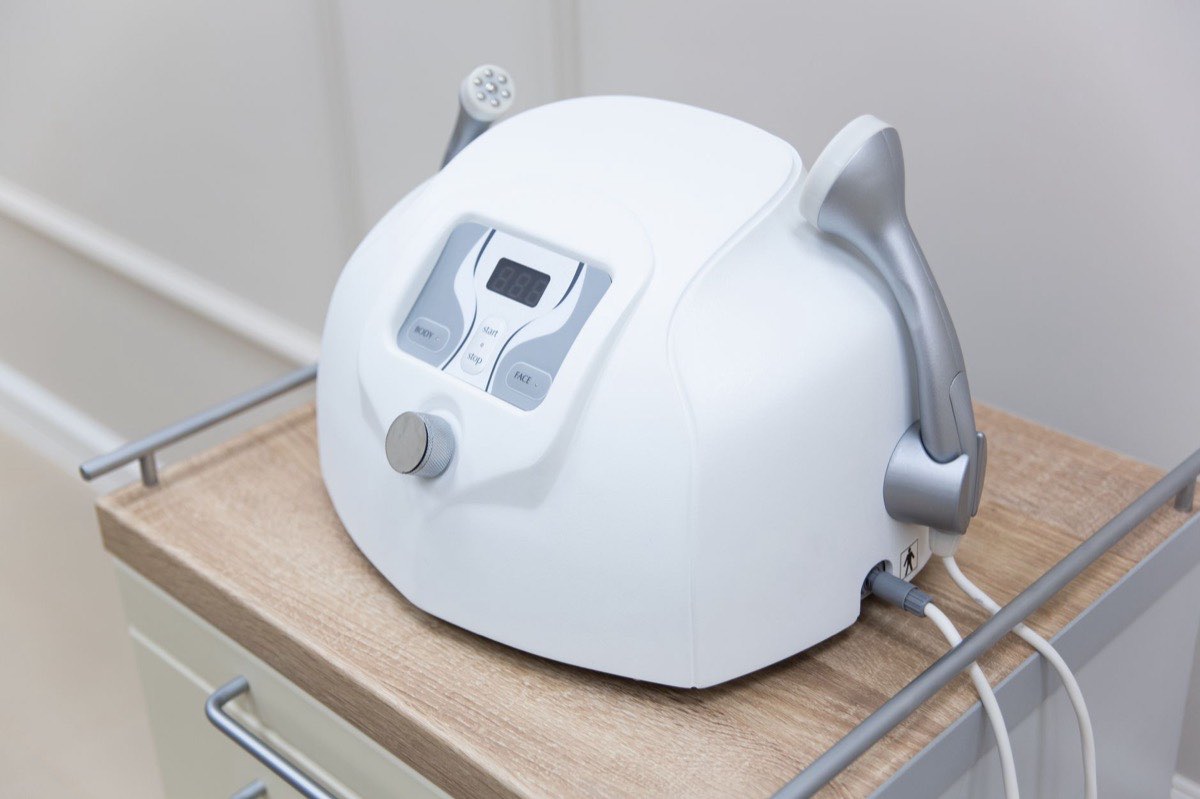
You’ve done the stretching. You’ve rested it, iced it, swapped your shoes, maybe even gotten a cortisone shot, and that nagging heel pain, the rope-tight Achilles, or the tendon that flares every time you load it just won’t fully let go. When a stubborn injury stalls out at the “60% better” mark, a lot of Reno patients start hearing about StemWave, a shockwave therapy that’s supposed to wake up healing in tissue that’s been stuck for months. If you’re weighing whether it’s worth your time and money, this guide walks through exactly what a StemWave session is like, what it costs as cash-pay care, and how to tell whether it’s the right next step for your problem.
What StemWave (shockwave therapy) actually is
StemWave is a brand of extracorporeal shockwave therapy (ESWT): a non-invasive treatment that delivers focused acoustic pressure waves into injured tissue through a handpiece on the skin. There are no needles, no incisions, and no medication. The “shock” in shockwave refers to a mechanical sound wave, not electricity.
The idea is straightforward but clever: chronic tendon and fascia problems often aren’t actively inflamed anymore, they’re stalled. The tissue stopped healing and settled into a low-grade, disorganized state. Shockwaves create a controlled mechanical stress that nudges the body back into a repair cycle. Peer-reviewed research describes the biological response this way:
“Shock waves can stimulate tenocyte proliferation and collagen synthesis.”
: Notarnicola A, Moretti B, The biological effects of extracorporeal shock wave therapy (eswt) on tendon tissue, Muscles, Ligaments and Tendons Journal (PMC)
In plain English: the waves prompt the cells that build tendon (tenocytes) to multiply and lay down new collagen, and they encourage new blood vessels to grow into tissue that had poor circulation. That’s why ESWT is used most often for problems that have gone chronic, the goal is to restart healing, not just mask pain.
The conditions it tends to help most
StemWave and other shockwave devices are used across a range of musculoskeletal complaints, but the evidence and real-world results are strongest for a few:
- Tendinopathy: Achilles, patellar (jumper’s knee), gluteal/hip, and tennis elbow are classic ESWT targets. Systematic reviews report accumulating evidence for shockwave therapy in lower-limb tendinopathies, especially when it’s paired with loading exercise rather than used alone.
- Plantar fasciitis: the band of tissue along the bottom of your foot. This is one of the most-studied uses of shockwave, though the research is genuinely mixed (more on that honesty below).
- Chronic pain that’s plateaued: calcific shoulder tendinitis, stubborn heel pain, and other “I’ve tried everything” cases where tissue healing has stalled.
I want to be straight with you, because that’s how we practice at Healing Hands. The evidence for shockwave on plantar fasciitis is not uniformly glowing. The American Academy of Orthopaedic Surgeons puts it plainly:
“Results of ESWT improving plantar fasciitis are mixed, and it is not clear that this treatment is helpful; therefore, ESWT is not commonly performed.”
So why do we still offer it? Because StemWave isn’t a first move, it’s a tool we reach for when the proven basics haven’t finished the job. AAOS also notes that more than 90% of plantar fasciitis patients improve within 10 months of starting simple treatment methods. For most people, hands-on manual therapy, smart loading, gait work, and footwear changes are what move the needle. Shockwave earns its place in the small slice of cases that stall out anyway, used as a catalyst alongside that hands-on care, not as a substitute for it.
What a StemWave session is actually like at Healing Hands
If you’ve only ever experienced insurance-mill PT (a few minutes with the therapist, then handed off to an aide and a machine) a concierge StemWave visit looks nothing like that. Here’s the real walkthrough.
It starts with hands, not a device. Every visit is a full hour, one-on-one with Dr. Jamie Pribyl (PT, DPT, MTC, that last credential is a manual therapy certification). Before any shockwave is applied, we assess the tissue, find the exact spot that’s driving your pain, and treat the surrounding restrictions with hands-on manual therapy. StemWave works best when the joint and soft tissue around the problem are already moving well, so the hands-on work isn’t an add-on, it’s what makes the wave land where it needs to.
The treatment itself. A conductive gel goes on the skin, then the handpiece delivers a series of pulses to the target area. Most people describe it as a firm tapping or pulsing sensation. There can be a moment of “yep, that’s the spot” discomfort right over the injury (that’s actually a good locating signal) and the intensity is dialed to your tolerance. A focused area of treatment usually takes only a few minutes of actual pulsing.
No downtime. You walk out and go about your day. There’s no needle site to baby, no sedation, no recovery window. Some tenderness for a day or two is normal as the tissue responds.
It’s a short series, not forever. Shockwave is typically delivered as a course of sessions spaced about a week apart, and we reassess as we go. Because each visit also includes a full hour of hands-on treatment and a progressive home program, you’re not paying for a passive zap, you’re getting comprehensive concierge care in Reno, with StemWave folded in.
What StemWave costs in Reno, and how to think about value
Here’s the honest money conversation. StemWave is cash-pay. Most insurance plans classify ESWT as investigational and won’t reimburse it, so quoting an “insurance price” would be misleading. What you pay is the value of a full hour of doctor-level, one-on-one care that includes the shockwave, not a separate per-zap machine fee tacked onto a rushed visit.
The right way to judge cost isn’t the price of a single session, it’s the total cost to actually get better. In a standard insurance clinic, a chronic tendon problem can mean 12, 16, or 20 visits where much of your time goes to aides and equipment, plus co-pays and co-insurance stacking up against a high deductible. A focused cash-pay plan that resolves the issue in a handful of comprehensive visits can cost less out of pocket, and gets you back to running, lifting, or simply walking without pain sooner.
To get a personalized quote and find out whether StemWave is even appropriate for your specific injury, call us at (775) 452-4471. We’ll tell you honestly if you’re a candidate, and if hands-on therapy alone is likely to do the job, we’ll tell you that too.
Is StemWave right for you?
It’s likely worth a conversation if:
- You have a chronic tendon or fascia problem (think months, not days) that has plateaued despite consistent effort.
- You’ve already tried (or are doing) the proven basics: loading exercise, manual therapy, footwear and activity changes.
- You want a non-surgical, non-injection, no-downtime option before considering more invasive steps.
It’s probably not the right first move if your problem is brand-new, acutely inflamed, or hasn’t yet been treated with the conservative care that resolves the large majority of cases. There are also specific safety contraindications (certain clotting issues, treating directly over some implants, pregnancy in the area, active infection), which is exactly why a proper evaluation comes first.
Frequently Asked Questions
Does StemWave hurt? Most people describe it as a firm tapping or pulsing. There’s often a brief, tolerable “that’s the spot” sensitivity directly over the injury, and the intensity is adjusted to your comfort. It’s far gentler than people expect.
How many sessions will I need? It varies by diagnosis and how long the problem has been there, but shockwave is usually a short course of weekly sessions with reassessment along the way, not an open-ended commitment. We give you a realistic estimate after your evaluation.
Will my insurance cover StemWave? Almost always no, most plans treat ESWT as investigational. StemWave at Healing Hands is cash-pay, bundled into a full hour of hands-on concierge care. If you have out-of-network benefits, we can provide a superbill you may submit, though shockwave specifically is rarely reimbursed.
Is StemWave the same as a regular cortisone shot or surgery? No. There’s no medication, no needle, and no incision. The goal is the opposite of masking symptoms, it’s to stimulate your own tissue to finish healing. Many patients pursue it specifically to avoid injections or surgery.
Is shockwave proven to work? The evidence is strongest for chronic tendinopathies, especially when combined with loading exercise; for plantar fasciitis the research is genuinely mixed. That’s why we use it as a targeted tool within hands-on care, not as a standalone cure-all.
The bottom line
If a stubborn tendon, heel, or chronic-pain problem has stalled despite doing the right things, StemWave can be the catalyst that gets healing moving again, and as part of a full hour of one-on-one, hands-on care, it’s a genuinely different experience from machine-driven insurance PT. The smartest first step is a straight conversation about whether it fits your specific injury.
Call Healing Hands at (775) 452-4471, or learn more about StemWave therapy and the patients we help across Reno.
Sources
- OrthoInfo (American Academy of Orthopaedic Surgeons): Plantar Fasciitis and Bone Spurs: https://orthoinfo.aaos.org/en/diseases—conditions/plantar-fasciitis-and-bone-spurs/
- Notarnicola A, Moretti B: The biological effects of extracorporeal shock wave therapy (ESWT) on tendon tissue (PMC): https://pmc.ncbi.nlm.nih.gov/articles/PMC3666498/
- ChoosePT (American Physical Therapy Association): Physical Therapy Guide to Plantar Fasciitis: https://www.choosept.com/guide/physical-therapy-guide-plantar-fasciitis
- The effectiveness of extracorporeal shock wave therapy in lower limb tendinopathy: a systematic review (PubMed): https://pubmed.ncbi.nlm.nih.gov/24817008/