Scar Tissue and Adhesion Release After Surgery: Myofascial Work in Reno
Stiff, tethered scar tissue after surgery? Hands-on myofascial release, manual therapy, and cupping in Reno help restore glide, mobility, and comfort.
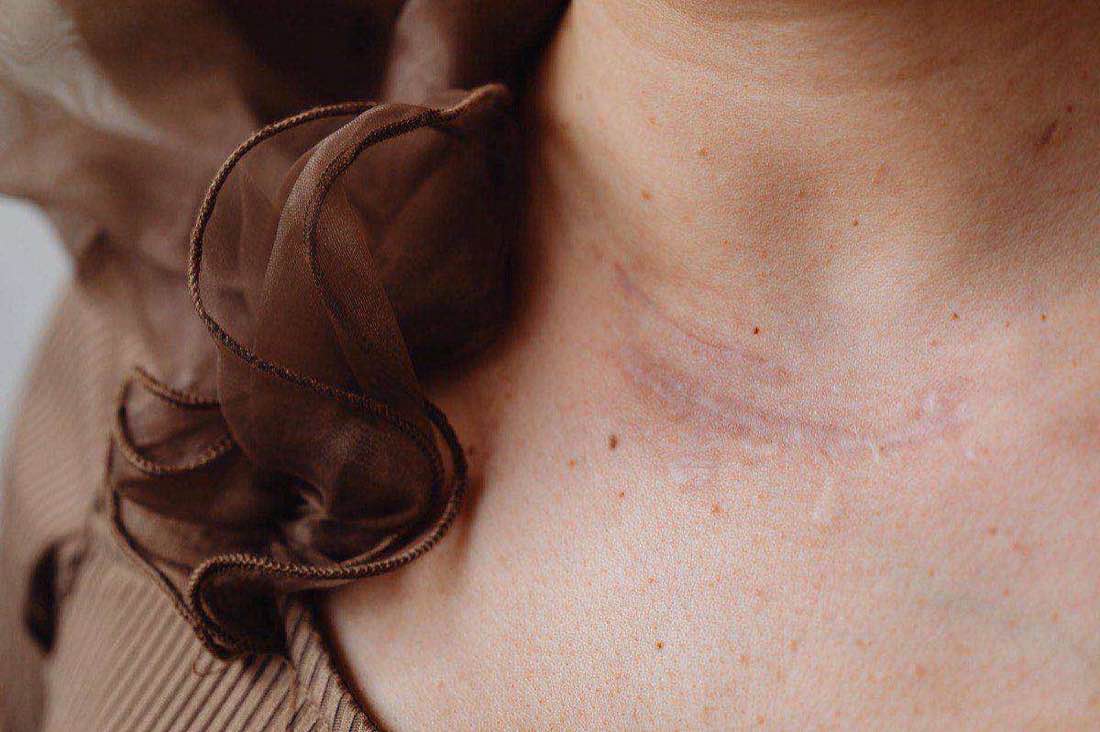
The surgery went fine. The incision closed, the staples came out, and your surgeon cleared you to “get back to normal.” But months later, something still isn’t right. The scar feels tight and rope-like. The skin around it pulls when you reach, twist, or bend. Maybe it’s numb in one spot and hypersensitive in another. Maybe a shoulder, knee, hip, or abdominal scar just won’t move the way it used to, and no one ever explained why. If you’re searching for scar tissue physical therapy in Reno, you’re not imagining it, and you’re not stuck with it.
At Healing Hands Physical Therapy and Bodywork, restoring movement to stubborn post-surgical scars and adhesions is some of the most satisfying work we do. With focused, hands-on care (myofascial release, manual therapy and bodywork, and cupping) we help your tissue learn to glide again. Here’s what’s actually happening under that scar, and how concierge, one-on-one PT in Reno addresses it.
Why a scar can quietly limit your whole recovery
Scar tissue is your body’s repair patch. When skin, muscle, or fascia is cut during surgery, the body lays down collagen quickly to close the gap. But it lays that collagen down in a disorganized, criss-cross pattern instead of the neat, parallel lines of healthy tissue. The result is a patch that’s stronger and stiffer than what it replaced, and far less elastic.
The bigger problem is often adhesions. Normally, the layers of your body (skin over fascia over muscle) slide smoothly past one another. After surgery, those layers can become “glued” together by scar tissue, restricting the gliding motion that lets you move freely. A knee scar can tether the kneecap. An abdominal or C-section scar can pull on the core and pelvis. A shoulder scar can quietly cap your overhead reach. The incision looks healed on the surface, but underneath, the soft tissue is restricted, and that restriction is exactly what we treat.
How myofascial release restores glide
Fascia is the continuous web of connective tissue that wraps every muscle, nerve, and organ in your body. When it’s injured and scarred, it tightens and pulls on everything connected to it, which is why a scar in one place can cause pulling, aching, or stiffness somewhere nearby. Myofascial release is the hands-on technique we use to address it directly. As the Cleveland Clinic explains:
“Myofascial release therapy is a type of gentle, constant massage that releases tightness and pain throughout your myofascial tissues.”
In practice, that means I find the specific restricted points around and beneath your scar and apply sustained, patient pressure until the tissue softens and lengthens. The Cleveland Clinic describes the same process: “First, your healthcare provider will locate trigger points, or knots, in your fascial tissues. Then, they’ll gently apply pressure until they feel the tension release.” It isn’t forceful or aggressive, it’s slow, specific, and guided by what your tissue is telling my hands in real time. Over a series of visits, the disorganized collagen begins to remodel and the stuck layers start sliding again. You can read more about how I use this approach on our myofascial release page.
Manual therapy and bodywork: addressing the whole movement pattern
A scar never restricts in isolation. When tissue gets tight and a joint stops moving fully, the surrounding muscles guard, neighboring joints overwork, and your body builds compensations to avoid the pulling. That’s why I pair myofascial release with broader manual therapy and bodywork (scar mobilization, soft-tissue work, and joint mobilization) to restore the full movement pattern, not just the inch of skin over the incision.
Direct scar mobilization helps realign those disorganized collagen fibers and reduce how firmly the scar is stuck to the tissue beneath it. It also brings fresh blood flow to an area that scar tissue tends to starve of oxygen and nutrients. This isn’t a fringe idea, it’s well supported in the research. A 2020 systematic review and meta-analysis in the Journal of Alternative and Complementary Medicine concluded that “physical scar management demonstrates moderate-to-strong effects on improvement of scar issues as related to signs and symptoms,” with benefits measured across pain, pliability, thickness, and more. The professional guidance is just as plain. The American Physical Therapy Association’s patient resource, ChoosePT, describes manual therapy this way:
“Your physical therapist may use hands-on treatments to mobilize your soft-tissue. This can address muscle spasms and tightness.”
Explore how this fits into a full session on our manual therapy page.
Where cupping fits in
For broader, more diffuse scar restriction (or scars that feel densely “stuck” across a wide area) I sometimes add cupping (also called myofascial decompression). Instead of pressing down into the tissue, cupping uses gentle suction to lift and separate the fascial layers, decompressing them rather than compressing them.
That lifting action can encourage stuck layers to release, draw fresh blood into the area, and improve the mobility of scar tissue that restricts movement. Cupping has been studied as a hands-on soft-tissue tool: one peer-reviewed study comparing myofascial decompression (cupping) to self-myofascial release found measurable acute changes in tissue after a single treatment. I use it selectively, alongside myofascial release and manual therapy, when your scar will respond better to a lift than to direct pressure, never as a one-size-fits-all gimmick.
What a concierge scar-release visit in Reno looks like
If you’ve done physical therapy before, you may remember being handed off to an aide or a sheet of exercises while the therapist juggled three other patients. That’s not how we work. At Healing Hands, every visit is a full hour, one-on-one, hands-on, with me: Dr. Jamie Pribyl, PT, DPT, MTC.
A typical first visit looks like this:
- A real history. We talk through your surgery, your timeline, what still pulls or aches, and what you want to get back to.
- A hands-on assessment. I evaluate how your scar moves in every direction, how the layers underneath glide, and how the restriction is affecting nearby joints and muscles.
- Treatment that same hour. Myofascial release, scar and soft-tissue mobilization, joint work, and cupping if it’s indicated, adjusted in real time based on how your tissue responds.
- A short, doable home plan. A few targeted self-mobilizations to keep the tissue gliding between visits.
Because we serve the whole region, we see post-surgical patients from Reno, Sparks, and the surrounding communities, many of whom were told their scar was “just how it heals.” It often isn’t.
A clear, honest cash-pay value
Healing Hands is a cash-pay, out-of-network concierge practice, and that’s a deliberate choice. Insurance contracts dictate how much time you get and how care is delivered, which is why insurance-based scar work is often a few rushed minutes squeezed between other patients. By stepping outside those contracts, I can give you the full, uninterrupted hour that hands-on tissue work actually requires.
For scar and adhesion release, that time is the whole point. Releasing fascia is slow, patient work; it can’t be rushed in ten minutes. You also see the same doctor every visit, so progress builds session to session instead of restarting with whoever’s available. Many patients find that fewer, more effective visits cost them less overall than a long string of short, partial ones, and you’ll always know exactly what you’re paying for, with no surprise bills.
If a post-surgical scar is holding your recovery back, let’s get that tissue moving again. Call (775) 452-4471 to book a one-on-one session, and we’ll build a hands-on plan around your scar, your goals, and your timeline.
Frequently Asked Questions
How long after surgery can I start scar tissue therapy? We begin only after your surgeon has cleared you and the incision is fully closed and healed, there’s no open wound or active infection. That’s often several weeks after surgery, but it varies by procedure. Even older scars from surgeries years ago frequently respond well, so it’s rarely “too late” to improve mobility.
Does scar tissue release hurt? Myofascial release is meant to be gentle and sustained, not forced. You may feel a deep stretch or mild tenderness as restricted tissue lets go, but it should never be sharp or painful. I work at the pace your tissue allows and adjust constantly based on your feedback.
How many sessions will I need? It depends on the size, age, and depth of the scar and how restricted the surrounding tissue is. Many patients notice improved glide and reduced pulling within the first few hour-long visits, with continued gains over a short series. You’ll get a realistic estimate after your first hands-on assessment.
Can therapy help a scar that’s years old? Yes. While newer scars often remodel faster, older scars and long-standing adhesions can still gain meaningful mobility with consistent hands-on work. Fascia remains responsive to skilled manual therapy well after the initial healing window.
Do I need a doctor’s referral to come in? Nevada allows direct access to physical therapy, so in most cases you can book directly with us. If your situation calls for coordination with your surgeon, we’ll help you sort that out. Call (775) 452-4471 and we’ll walk you through it.
Sources
- Cleveland Clinic: Myofascial Release Therapy: https://my.clevelandclinic.org/health/treatments/24011-myofascial-release-therapy
- ChoosePT (American Physical Therapy Association): Physical Therapy Guide to Temporomandibular Joint Disorder: https://www.choosept.com/guide/physical-therapy-guide-temporomandibular-joint-disorder
- Deflorin C, Hohenauer E, Stoop R, van Daele U, Clijsen R, Taeymans J. Physical Management of Scar Tissue: A Systematic Review and Meta-Analysis. Journal of Alternative and Complementary Medicine, 2020: PubMed: https://pubmed.ncbi.nlm.nih.gov/32589450/
- Williams MJ, et al. Acute Outcomes of Myofascial Decompression (Cupping Therapy) Compared to Self-Myofascial Release on Hamstring Pathology After a Single Treatment. International Journal of Sports Physical Therapy: PMC: https://pmc.ncbi.nlm.nih.gov/articles/PMC7735689/