Physical Therapy for Tennis Elbow in Reno: Stop Chasing Temporary Fixes
Tennis elbow that won't quit? Hands-on physical therapy in Reno using manual therapy, StemWave shockwave, and dry needling to heal the tendon.
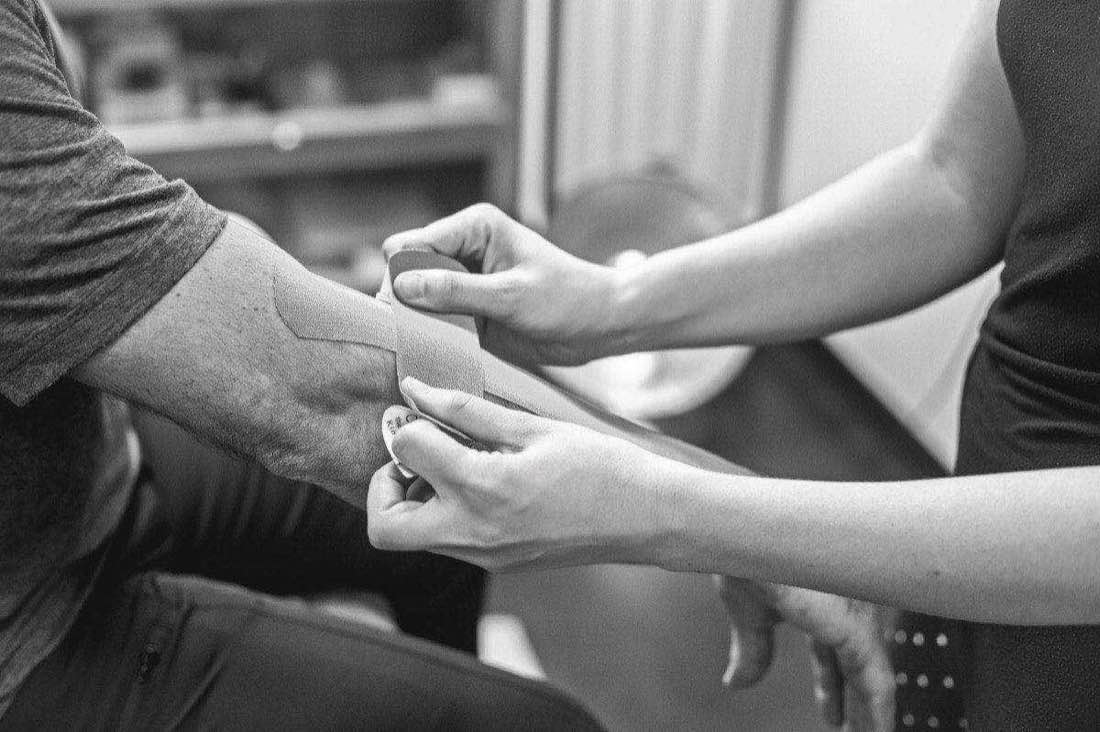
It starts small. A twinge on the outside of your elbow when you grab a coffee mug, shake a hand, or lift a grocery bag. You ignore it. A few weeks later, that twinge has turned into a sharp, nagging ache that flares every time you grip, turn a doorknob, or type for too long. You’ve tried a brace, some ibuprofen, maybe a few days of rest, and the moment you go back to normal life, the pain comes right back. If that cycle sounds familiar, you’re likely dealing with tennis elbow, and you’ve probably already learned the frustrating truth about it: temporary fixes give you temporary relief.
Tennis elbow, known medically as lateral epicondylitis, is an overuse injury of the tendons on the outside of your elbow, the ones that connect your forearm muscles to the bony bump (the lateral epicondyle) you can feel on the outer side of the joint. Despite the name, you almost certainly didn’t get it from tennis. As the Cleveland Clinic notes, “Even though it’s named for tennis, that’s not the most common cause. Experts estimate that more than 9 in 10 people develop it for other reasons.” Painters, electricians, mechanics, hairstylists, dental hygienists, gardeners, gamers, and anyone who grips and twists repeatedly are all classic candidates here in Reno.
Why tennis elbow is so stubborn
Here’s the part that explains why rest and pills keep failing you: tennis elbow usually isn’t an inflammation problem, it’s a tendon degeneration problem. According to OrthoInfo from the American Academy of Orthopaedic Surgeons, “Tennis elbow involves the degeneration (wearing down) or, in some cases, microtearing of the tendons that join the forearm muscles on the outside of the elbow.” The tendon’s fibers have actually broken down and started to fray from repeated stress.
That matters enormously for treatment. An anti-inflammatory pill can quiet the ache, but it does nothing to rebuild a worn tendon. A brace can take load off the area, but the moment you grip again, the damaged tissue is still damaged. Even a cortisone shot (which feels like a miracle for a few weeks) only masks the pain while the underlying tendon problem persists. That’s why so many people with tennis elbow describe months of going in circles.
The encouraging news is that you have excellent odds of healing without surgery. OrthoInfo reports that “approximately 80 to 95% of patients have success with nonsurgical treatment.” The goal isn’t to numb the elbow, it’s to actually stimulate that tired tendon to repair itself and rebuild the strength to handle daily load. That’s exactly what hands-on physical therapy is built to do.
How we treat tennis elbow at Healing Hands
At Healing Hands PT, Dr. Jamie Pribyl, PT, DPT, MTC, takes a layered approach, combining hands-on work, targeted tendon stimulation, and progressive loading. Three tools do most of the heavy lifting, and here’s exactly how each one helps your elbow.
Manual therapy and bodywork
The forearm muscles that feed into your sore tendon are almost always tight, ropey, and overloaded by the time you come in. Skilled hands-on treatment is the foundation of getting them to release. The American Physical Therapy Association’s ChoosePT guide describes the role of manual therapy directly:
“Your physical therapist may use manual (hands-on) therapy, such as massage or other techniques. This treatment helps to reduce tightness in the soft tissue and joints to enable your joints and muscles to move more freely with less pain.”
, ChoosePT (American Physical Therapy Association), “Physical Therapy Guide to Tennis Elbow”
In practice, that means soft-tissue work along the wrist extensors, joint mobilization at the elbow and wrist, and freeing up tightness all the way up the forearm and into the shoulder and neck, because how you hold and use the whole arm feeds the problem at the elbow. Reducing that tension takes the constant tug off the irritated tendon attachment so it can finally settle. Learn more about our manual therapy and bodywork approach.
StemWave (shockwave therapy)
This is the tool that targets the worn tendon itself. StemWave is a form of focused extracorporeal shockwave therapy (ESWT) that delivers acoustic pressure waves into the damaged tendon. Rather than masking pain, it provokes a healing response, increasing local blood flow and triggering the body’s own repair signaling in tissue that had become stalled and degenerative.
The research backs this up specifically for tennis elbow. A systematic review and meta-analysis published in the National Institutes of Health’s PubMed Central database, pooling 13 studies and over 1,000 patients, concluded that “extracorporeal shock wave therapy can effectively relieve pain and functional impairment caused by tennis elbow.” Notably, a separate 2024 meta-analysis found that compared to corticosteroid injections, shockwave therapy delivered superior pain relief and function at the 3- and 6-month marks, meaning the benefit holds up over time rather than fading like a shot. Treatment is non-invasive, takes only a few minutes, and requires no downtime, so you can use your arm normally afterward.
Dry needling
When tight knots (trigger points) in the forearm muscles are part of the picture, dry needling lets us reach them directly. A thin, sterile filament needle is inserted into the taut band of muscle to release the knot, reduce pain, and improve how the muscle moves and recovers. A 2025 randomized controlled trial indexed on PubMed found that dry needling combined with eccentric exercise was more effective at reducing pain and improving hand function in tennis elbow patients than NSAID-based treatment, reinforcing that needling works best as part of a complete program, not as a standalone fix.
Used together, these three tools attack tennis elbow from every angle: manual therapy releases the overloaded tissue, StemWave stimulates the tendon to rebuild, dry needling clears the trigger points, and progressive strengthening exercises make sure the repaired tendon can handle real life without re-injuring.
What a concierge visit actually looks like
Most patients with tennis elbow have already cycled through the standard system: a rushed appointment, a brace, a printout of exercises, and 15 minutes of clinic time shared with a therapist juggling three other people. That’s not how we work.
At Healing Hands PT, every session is one-on-one, hands-on, and a full hour with Dr. Pribyl herself, no aides, no double-booking, no being parked on a machine while she walks away. We come to you, or you visit our private Reno treatment space. Your first visit is a thorough evaluation of not just the elbow, but your wrist, shoulder, posture, and the daily movements that keep aggravating it. From there you get a hands-on treatment that same day and a clear, personalized plan. Because we serve patients throughout Reno and the surrounding area on a concierge basis, your care fits your schedule, not the clinic’s.
The cash-pay value: fewer visits, real results
People sometimes assume cash-pay physical therapy must cost more. In practice, it’s often the opposite. Insurance-based clinics frequently require many short, diluted visits to hit billing thresholds, and ChoosePT points to research showing that physical therapy for tennis elbow is more cost-effective than steroid injections over the course of care. Because every Healing Hands session is a full hour of focused, expert treatment, patients typically need far fewer visits to get better. You pay for outcomes, not for showing up.
No referral required. No insurance runaround. No surprise bills. Just direct access to a Manual Therapy Certified doctor of physical therapy who treats you herself, every time.
If your elbow has been holding you back for weeks or months, stop chasing temporary fixes. Call Healing Hands PT at (775) 452-4471 to book your evaluation and start actually healing the tendon.
Frequently Asked Questions
How long does it take to recover from tennis elbow?
Recovery varies by how long you’ve had it and how worn the tendon is. The Cleveland Clinic notes that tennis elbow “usually takes around six months to recover, but some people need longer.” The good news is that focused, hands-on care (rather than passive rest) tends to speed that timeline by actively stimulating tendon repair instead of waiting for it.
Do I need surgery for tennis elbow?
Almost certainly not. OrthoInfo reports that approximately 80 to 95% of patients succeed with nonsurgical treatment. Surgery is reserved for the small minority who don’t improve after a sustained course of conservative care.
Is StemWave shockwave therapy painful?
Most patients describe it as a deep tapping or pulsing sensation that can be mildly uncomfortable over the tender spot, but it’s brief and well tolerated. It’s non-invasive, requires no numbing, and has no downtime, you can use your arm normally right afterward.
Will rest and a brace fix it on their own?
They can ease symptoms temporarily, but tennis elbow is a tendon-degeneration problem, so rest alone usually doesn’t rebuild the damaged tissue. That’s why the pain so often returns the moment you resume normal activity. Active treatment that stimulates healing and rebuilds strength is what produces lasting results.
Do I need a doctor’s referral to be seen in Reno?
No. Nevada allows direct access to physical therapy, so you can book directly with Healing Hands PT, no referral and no insurance pre-authorization needed. Just call (775) 452-4471.
Sources
- ChoosePT (American Physical Therapy Association): Physical Therapy Guide to Tennis Elbow (Lateral Epicondylitis)
- ChoosePT (American Physical Therapy Association): Choosing Physical Therapy for Tennis Elbow Outperforms Steroid Injections and Is Cost-Effective
- OrthoInfo (American Academy of Orthopaedic Surgeons): Tennis Elbow (Lateral Epicondylitis)
- Cleveland Clinic: Tennis Elbow (Lateral Epicondylitis)
- NIH / PubMed Central: Efficacy of Extracorporeal Shock Wave Therapy for Lateral Epicondylitis: A Systematic Review and Meta-Analysis
- NIH / PubMed: Extracorporeal Shock Wave Therapy Versus Local Corticosteroid Injection for Chronic Lateral Epicondylitis: A Systematic Review with Meta-Analysis of Randomized Controlled Trials
- NIH / PubMed: Efficacy of Dry Needling Combined with Eccentric Exercise Versus Oral and Topical NSAID Treatment in Patients with Tennis Elbow: A Randomized Controlled Trial