Physical Therapy for Sciatica in Reno: Relieve Leg Pain Without Surgery
Sciatica shooting down your leg? Hands-on, one-on-one physical therapy in Reno using manual therapy, dry needling, and muscle energy technique.
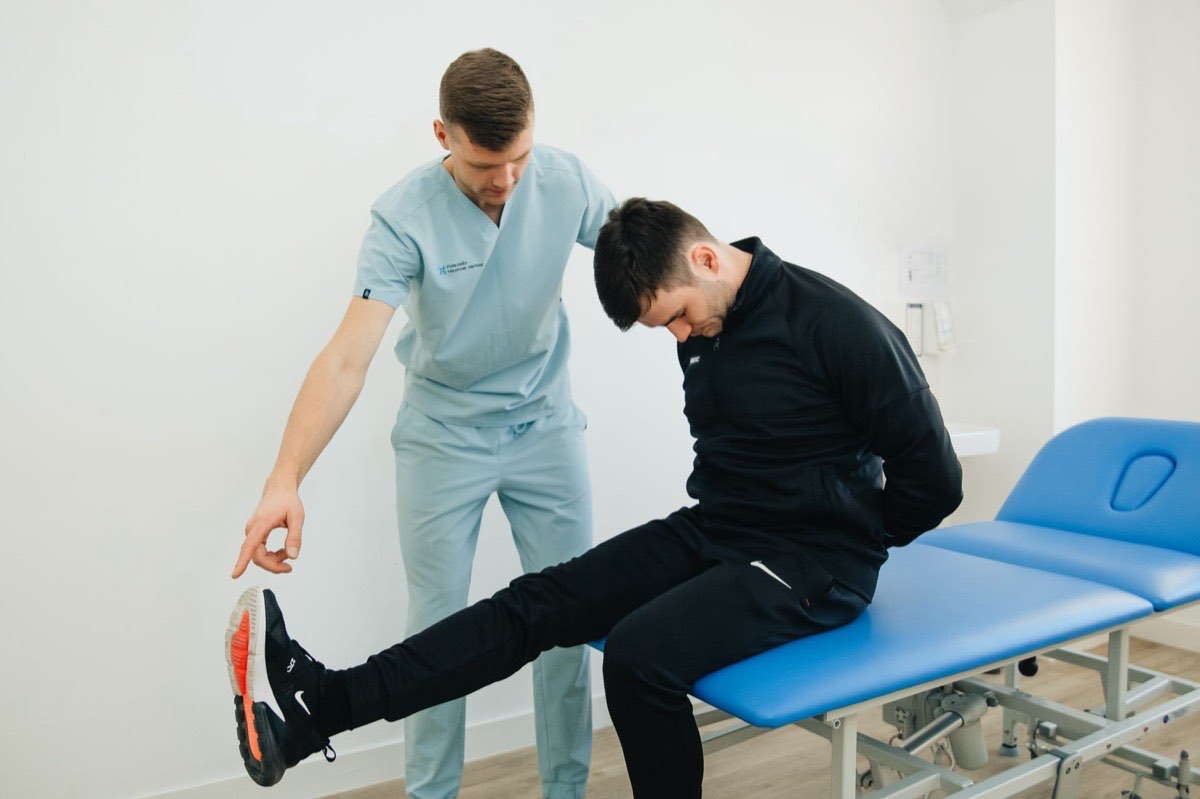
It usually starts in your low back or deep in one buttock, then travels, a burning, electric line of pain that shoots down the back of your leg, sometimes all the way to your foot. Sitting makes it worse. Standing up from a chair makes you brace. Sneezing feels like a lightning strike. If that sounds familiar, you’re likely dealing with sciatica, and the good news is that you almost certainly don’t need surgery to get relief.
Sciatica isn’t a diagnosis so much as a symptom: pain caused by irritation or compression of the sciatic nerve, the largest nerve in your body. As the Cleveland Clinic puts it plainly:
“Sciatica is nerve pain from an injury or irritation to your sciatic nerve.”
That nerve runs from your lower spine, through your hip and buttock, and down each leg, which is exactly why sciatica shows up across the low back, hip, and leg all at once. Most of the time, the culprit is a herniated or bulging disc in the lumbar spine pressing on a nerve root, or a tight, irritated muscle (often the piriformis, deep in the hip) squeezing the nerve as it passes through. The pinch point varies; the experience is the same: pain, numbness, tingling, or weakness down the leg.
You probably don’t need surgery, and that matters
This is the part most patients are relieved to hear. The overwhelming majority of sciatica cases resolve with conservative, non-surgical care. The American Physical Therapy Association’s ChoosePT guide states it directly:
“The majority of lumbar radiculopathy and sciatica cases recover without surgery, and respond well to physical therapy.”
The same guide goes a step further, noting that “in all but the most extreme cases of lumbar radiculopathy, conservative care (such as physical therapy) often results in better and faster results than surgery or pain medication.” Cleveland Clinic echoes the point: “Most people recover with stretching, medication or physical therapy.”
So the real question isn’t surgery vs. no surgery. It’s: how do you get the nerve to calm down, the tissue around it to release, and your back and hip strong enough that the pain doesn’t keep coming back? That’s where a hands-on physical therapist earns their keep.
How we actually treat sciatica at Healing Hands
At Healing Hands Physical Therapy and Bodywork, I’m Dr. Jamie Pribyl (PT, DPT, MTC), and every sciatica visit is a full hour, one-on-one: no aides, no handoffs, no being parked on a stim machine. Sciatica is a moving target: the pain source can be a disc, a joint, or a muscle, and it can change week to week. Treating it well takes hands-on assessment and real-time adjustment, not a printed protocol. Here are the three techniques I lean on most.
Manual therapy and bodywork, taking pressure off the nerve
The first job is to reduce the mechanical irritation on the sciatic nerve and restore movement in the segments that have locked down. Hands-on manual therapy (joint mobilization of the lumbar spine and pelvis, soft-tissue and myofascial work through the glutes and deep hip rotators, and gentle neural mobilization to help the nerve glide instead of catch) does exactly that. When a herniated disc or a tight hip is compressing the nerve, freeing up the surrounding joints and muscle layers often takes the “pinch” off and lets the leg pain settle. ChoosePT describes physical therapists as designing “individualized treatment programs to help people with lumbar radiculopathy reduce their pain, regain normal movement, and get back to their normal activities”, and the hands-on hour is where that individualization actually happens.
Dry needling, quieting the muscles that refer pain down the leg
A surprising amount of “sciatica” is amplified (or even driven) by trigger points in the gluteal and deep hip muscles that refer pain straight down the leg in a sciatic pattern. Dry needling places a thin monofilament needle directly into those taut, irritable bands to release them and turn down the pain signal. This isn’t just clinical hopefulness: a randomized controlled trial published in the Journal of Research in Medical Sciences (indexed on NIH’s PubMed Central) studied 58 people with discogenic low-back pain that radiated into one or both legs and found that adding dry needling to standard physical therapy produced significantly greater pain reduction, improvements that “continued during 2 months after the last active intervention.” For a sciatic flare that won’t quit, needling the right muscle can be the thing that finally breaks the cycle.
Muscle energy technique, resetting the hip and pelvis
Muscle energy technique (MET) uses your own gentle muscle contractions against my resistance to restore normal alignment and length to the muscles around the pelvis and hip. For sciatica driven or aggravated by the piriformis and a rotated, stiff pelvis, MET helps lengthen the offending muscle, level the pelvis, and open up the space the sciatic nerve has to travel through, all without forceful manipulation. It pairs naturally with the manual and needling work above: needling quiets the muscle, MET retrains its length and the joint’s position, and manual therapy restores the glide.
What a concierge visit looks like
If you’ve done insurance-based PT before, this will feel different. You won’t share me with three other patients. A typical first visit at Healing Hands runs a full 60 minutes: a thorough exam to pinpoint where your sciatic nerve is actually being irritated, hands-on treatment that same day, and a short, targeted home program built around your real life, not a generic exercise sheet. Because I serve the Reno area as a small, by-appointment practice, you get continuity: the same doctor every visit, who remembers what changed last week and adjusts accordingly.
Most sciatica patients feel meaningful change within the first few visits, and because each session is longer and more hands-on, many people reach relief in fewer total visits than a traditional clinic requires.
The cash-pay value
Healing Hands is a cash-pay, out-of-network practice, and for sciatica, that model is a feature, not a drawback. You’re not capped at the 15 rushed minutes an insurance contract allows; you get the full hour of skilled, hands-on care every time. There are no surprise “explanation of benefits” bills months later, no fighting over visit authorizations, and no being told a technique that’s helping you isn’t “covered.” You know the price up front, and the entire hour goes toward getting your leg pain to stop. For many people, paying directly for focused, effective care actually means fewer visits and lower total cost than drawn-out, diluted insurance PT.
Ready to stop bracing every time you sit down? Call Healing Hands Physical Therapy and Bodywork in Reno at (775) 452-4471 to schedule a one-on-one sciatica evaluation with Dr. Jamie Pribyl.
Frequently Asked Questions
How long does it take for physical therapy to relieve sciatica?
Many cases of sciatica improve within a few weeks of starting care, and Cleveland Clinic notes that many cases improve within four to six weeks. Because our visits are a full hour of hands-on treatment, patients often notice a meaningful drop in leg pain within the first few sessions, though the exact timeline depends on the cause and how long you’ve had it.
Do I really need surgery for sciatica?
For most people, no. The APTA’s ChoosePT guide states that the majority of sciatica cases recover without surgery and respond well to physical therapy. Surgery is generally reserved for severe or progressive cases, for example, significant or worsening weakness. We’ll always refer you on promptly if your exam shows red flags.
Is dry needling painful, and is it safe for sciatica?
Most patients feel a brief muscle twitch or ache rather than sharp pain. Dry needling targets the irritable muscle trigger points that refer pain down the leg, and research on radiating low-back pain has found that adding it to standard therapy improves pain relief. It’s performed by your licensed doctor of physical therapy as part of your hands-on session.
Do I need a referral or insurance to come in?
No. Nevada allows direct access to physical therapy, so you can book an evaluation without a physician referral. As a cash-pay practice, you also don’t need to be in-network, you’ll know the cost up front, with no surprise insurance bills.
What if my pain is in my hip, not my back?
That’s still very much in scope. The sciatic nerve passes through the hip, and tight deep-hip muscles (like the piriformis) are a common driver of sciatic-pattern leg pain. We assess the low back, pelvis, and hip together and treat the actual source.
Sources
- Cleveland Clinic: Sciatica: What It Is, Causes, Symptoms, Treatment & Pain Relief
- ChoosePT / American Physical Therapy Association: Physical Therapy Guide to Lumbar Radiculopathy and Sciatica
- APTA: Research Review: Early Physical Therapy Works for Sciatica
- NIH PubMed Central: The effect of dry needling on the radiating pain in subjects with discogenic low-back pain: A randomized control trial