Physical Therapy for IT Band Syndrome in Reno: Relief for Runners and Cyclists
Sharp outer-knee pain that flares mid-run or ride? Hands-on, one-on-one PT in Reno for IT band syndrome using myofascial release and dry needling.
You felt great for the first three miles. Then, somewhere on the Truckee River path or climbing toward Galena, a sharp, burning pain lit up on the outside of your knee. It got worse with every stride or pedal stroke until you had to stop. Walking is fine. Stairs (especially going down) are not. And the moment you try to run or ride again, it’s right back. If that’s your story, you’re almost certainly dealing with iliotibial band syndrome (ITBS), the most common overuse injury that sidelines Reno’s runners and cyclists.
The frustrating part is that ITBS rarely shows up at rest. You can walk around pain-free, convince yourself it’s healed, lace up, and get shut down at the same point every time. That stop-start cycle is why so many endurance athletes limp along for months. The good news: it responds well to the right hands-on care, and you don’t need surgery or a cortisone shot to get back out there.
What IT band syndrome actually is
The iliotibial band is a long, tough strip of connective tissue (fascia) running down the outside of your thigh from your hip to just below your knee. As the American Physical Therapy Association’s ChoosePT guide explains, it becomes a problem through repetitive motion, “irritation and inflammation arise from friction between the IT band and underlying structures when an individual moves through repetitive straightening and bending of the knee.”
That description is a near-perfect fit for distance running and cycling, which is why this condition is so common in our active community. ChoosePT notes that ITBS “accounts for up to 12% of running injuries and up to 24% of cycling injuries.” So if you’re a cyclist, you’re not imagining it, your sport carries an even higher risk.
Here’s the part most people miss: the pain is at your knee, but the cause is usually higher up, at your hip. Weak or poorly coordinated hip muscles (especially the glutes) let your thigh and knee collapse inward with each step or stroke, ramping up tension and friction along the band. Tight hip and outer-thigh tissue, a sudden mileage jump, worn-out shoes, and running the same direction on a cambered road all pile on. Treat only the sore knee and you’ll be back in a month. Treat the whole chain (hip, fascia, and movement pattern) and it stays gone.
How hands-on therapy gets you running and riding again
ITBS is fundamentally a tension-and-loading problem, which is why a hands-on approach works so well. The goal is to calm the irritated tissue, restore glide and mobility through the band and surrounding muscles, and then retrain your hip to control the load. ChoosePT puts the mission simply:
“Physical therapists help people with ITBS lessen pain, restore movement, and return to activities and sport.”
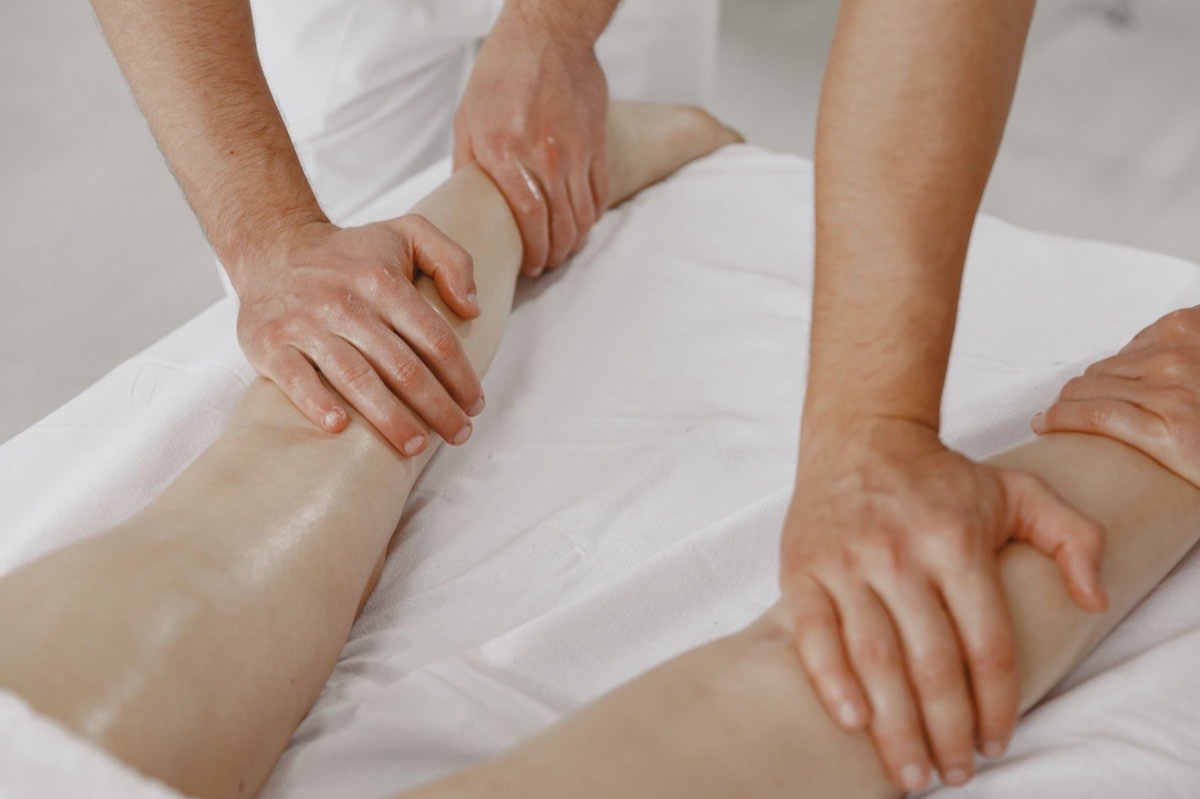
At Healing Hands PT, the foundation of that work is myofascial release. Foam-rolling the IT band itself is famously miserable and largely misses the point, the band is too dense to “stretch.” Instead, skilled myofascial release targets the muscles and fascia that attach to and pull on the band: the tensor fasciae latae and glutes at the hip, and the lateral thigh tissue. By releasing those restrictions by hand, we reduce the tension feeding into the band so it stops grinding against the side of your knee with every stride.
This is where the broader manual approach matters. The APTA explains that “many physical therapists are trained in manual therapy, which means they use their hands to move and manipulate muscles and joints to improve motion and strength.” In practice that means I assess and mobilize your hip, knee, and even the small joint at the top of your shinbone (the tibiofibular joint), then add dry needling when a stubborn trigger point in the glute or lateral quad won’t let go. A thin filament needle into a taut, knotted band of muscle can release tension that hands alone can’t reach, quieting the muscles that yank on the IT band and dialing down the friction at your knee.
The combined, multi-angle approach isn’t just my preference, it’s what the research supports. A case series published in the NIH’s PubMed Central, treating runners with ITBS using myofascial release, joint mobilization, dry-needling-adjacent soft tissue work, and hip strengthening, concluded:
“These case reports demonstrate the successful management of ITBS using a multifaceted approach based on the current literature and regional interdependence.”
“Regional interdependence” is the technical way of saying what I told you above: the knee hurts, but you have to treat the hip. Both runners in that report returned to pain-free running. Once the tissue calms down, we layer in targeted hip-abductor and glute strengthening plus gait or cycling-form cues so the band stops getting overloaded in the first place.
What a concierge visit looks like
This is where Healing Hands PT is different from the high-volume clinic where you’d get 15 rushed minutes and a handout of exercises. Here, you get me: Dr. Jamie Pribyl, for the full hour, one-on-one, every visit. No aides, no being parked on a bike while three other patients rotate through.
For an IT band problem that means I have the time to actually watch you move: how your hip controls your knee on a single-leg squat, how your foot strikes, where your form breaks down under fatigue. Then I spend real hands-on time on the tissue that needs it (myofascial release through the hip and lateral thigh, joint mobilization, dry needling where indicated) and finish by coaching you through the exact strengthening and form changes that keep it from returning. Because I see the whole picture in one room, we move faster and waste fewer visits than the stop-start care most runners get bounced between.
I also serve much of the area as a mobile, in-home option. If you’d rather be treated at home or near your usual training routes, see the Reno areas we serve.
The cash-pay value for active people
Healing Hands PT is a cash-pay, concierge practice, and for an athlete that’s usually the better deal, not the more expensive one. Insurance-based clinics often need a dozen-plus short visits, each with a copay, to deliver what a few focused one-on-one sessions can. You’re not paying for a crowded gym floor; you’re paying for an hour of expert hands and a plan built around your training goals.
There are no surprise bills and no cap on what we address because a payer decided your time was up. Most runners and cyclists want one thing: to get back to the activity they love, quickly and for good. A handful of efficient, hands-on visits is the fastest route there.
If sharp outer-knee pain is cutting your runs and rides short, let’s fix the root cause. Call or text Healing Hands PT at (775) 452-4471 to book a one-on-one evaluation and get a real plan to get back on the trail.
Frequently Asked Questions
Is IT band syndrome a knee problem or a hip problem?
It’s felt at the knee but usually driven by the hip. Weak or poorly coordinated hip and glute muscles let the thigh and knee collapse inward, increasing tension and friction along the IT band where it crosses the outside of the knee. That’s why effective treatment addresses the whole chain (the principle of “regional interdependence”) rather than just the painful spot.
Why doesn’t foam rolling my IT band fix it?
The IT band is dense connective tissue that doesn’t meaningfully stretch or lengthen by rolling on it, and rolling directly over the irritated tissue can actually aggravate it. Hands-on myofascial release works better because it targets the muscles and fascia that pull on the band (at the hip and lateral thigh) to reduce the tension feeding the problem.
How long until I can run or ride again?
It varies with how long it’s been going on and how much you can modify training, but many people with ITBS recover within roughly six weeks of consistent, conservative treatment. A focused hands-on plan plus the right hip strengthening tends to get athletes back faster than stop-start care.
Does dry needling help IT band syndrome?
It can. Dry needling targets taut, knotted trigger points in the glutes and lateral thigh muscles that overload the IT band. Releasing those points reduces the muscular tension pulling on the band, often relieving pain that manual techniques alone can’t fully reach. Learn more about dry needling at Healing Hands PT.
Do I need a referral or insurance to be seen?
No. Healing Hands PT is a cash-pay concierge practice, so there’s no referral hoop, no prior authorization, and no copays, just book directly and we get to work. Call or text (775) 452-4471 to schedule.
Sources
- ChoosePT / American Physical Therapy Association: Physical Therapy Guide to Iliotibial Band Syndrome (ITBS): https://www.choosept.com/guide/physical-therapy-guide-iliotibial-band-syndrome-itbs
- OrthoInfo / American Academy of Orthopaedic Surgeons (AAOS): Iliotibial Band (IT Band) Syndrome: https://orthoinfo.aaos.org/en/diseases—conditions/iliotibial-band-it-band-syndrome/
- Shamus J, Shamus E, via PubMed Central (NIH): The Management of Iliotibial Band Syndrome with a Multifaceted Approach: A Double Case Report: https://pmc.ncbi.nlm.nih.gov/articles/PMC4458926/