Physical Therapy for Hip Pain in Reno: Manual Therapy for Bursitis and Impingement
Hip pain in Reno? Concierge manual therapy, muscle energy technique, and StemWave for bursitis and hip impingement. Hands-on, cash-pay PT in Reno.
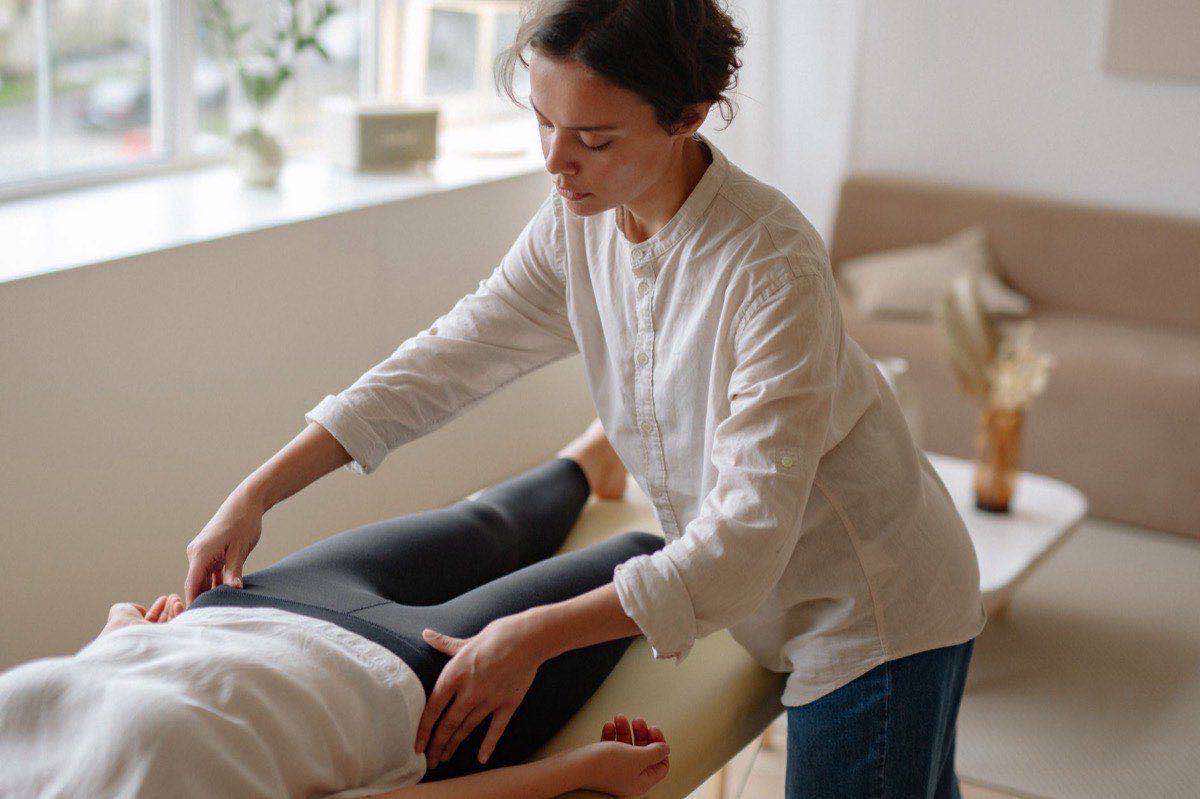
You roll over in bed and a deep ache flares on the outside of your hip. You stand up after a long drive and feel a sharp pinch in the front of the joint. You skip the trail you love because the first mile lights your hip up. If hip pain has crept into your daily life in Reno, you’re not imagining it, and you don’t have to live around it.
At Healing Hands Physical Therapy and Bodywork, hip pain is one of the most common reasons people come through the door. Two culprits show up again and again: hip bursitis (pain on the outside of the hip) and hip impingement (a pinch deep in the front of the joint). They feel different and respond beautifully to a hands-on, one-on-one approach. Here’s what’s going on, how we treat it, and what a concierge visit looks like.
Bursitis vs. impingement: two very different hip problems
The first job is figuring out which hip problem you have, because the wrong plan can keep you stuck for months.
Hip bursitis (more precisely trochanteric bursitis) is pain over the bony point on the side of your hip. As OrthoInfo, the patient-education service of the American Academy of Orthopaedic Surgeons, puts it, “One bursa covers the bony point of the hip bone called the greater trochanter,” and “the main symptom of trochanteric bursitis is pain at the point of the hip. The pain usually extends to the outside of the thigh area.” Cleveland Clinic describes the same picture plainly: trochanteric bursitis is “painful swelling near your hip joint,” and you might feel it “on the outside of your hip” and “in the side of your upper thigh.” It’s the pain that makes lying on that side at night nearly impossible.
Hip impingement (femoroacetabular impingement, or FAI) is a different beast. Instead of pain on the outside, you feel a pinch or ache deep in the front of the hip or groin, usually worst with deep squatting, prolonged sitting, or twisting. It happens when the ball and socket of the hip don’t glide cleanly, and the extra contact irritates the cartilage and labrum over time.
The catch: both can leave the same trail of compensations (tight hip muscles, a cranky low back, an altered walking pattern) so they often feel tangled together. Sorting them out with a thorough hands-on exam is the point of your first visit.
How manual therapy and muscle energy technique help your hip
Hip pain is rarely just “a bursa” or “a joint.” It’s the whole system around it (the glutes, the IT band, the deep rotators, the way the femur sits in the socket) pulling and pinching in patterns that keep the painful structure irritated. That’s exactly what skilled manual therapy is designed to change.
For bursitis, the bursa is the angry messenger, not the root cause. The real driver is usually tension and weakness in the muscles that wrap the side of the hip, compressing the bursa with every step. Hands-on soft-tissue work to the glutes, tensor fasciae latae, and IT band can offload that compression, while targeted strengthening rebuilds the support the joint needs. As Cleveland Clinic notes, “physical therapy can strengthen the area around your injured hip. A physical therapist will give you stretches and exercises.” OrthoInfo adds that “a physical therapist may teach you how to stretch your hip muscles and use other treatments such as rolling therapy (massage)”, the hands-on approach we build every session around.
For impingement, the goal is to restore clean motion so the joint stops pinching itself. Muscle Energy Technique (MET) is one of our favorite tools here. MET uses your own gentle muscle contractions against precise resistance to reset the position of the pelvis and femur and free up restricted motion, no forceful cracking, just your nervous system doing the work with expert guidance. We pair it with hands-on joint mobilization to give the femoral head room to glide. The American Physical Therapy Association’s ChoosePT guide describes the hands-on piece simply:
“Your physical therapist may gently move your hip to help ease pain.”
: American Physical Therapy Association, ChoosePT: Physical Therapy Guide to Hip Impingement
Restoring motion is only half the equation, the joint then needs strength to hold its new position. On that, ChoosePT is direct: “Strengthening the hips and trunk can reduce abnormal forces on the already injured joint.” That’s why every plan moves from hands-on relief into progressive strengthening you can actually keep doing.
When the tendon is the problem: StemWave shockwave therapy
Stubborn lateral hip pain often isn’t just bursitis, it’s a worn-down gluteal tendon irritating the bursa, a combination clinicians call greater trochanteric pain syndrome. Tendons in this state are notoriously slow to heal, and that’s where StemWave earns its place in the plan.
StemWave is a focused shockwave (extracorporeal shockwave therapy) device that delivers targeted acoustic energy into the tissue. The pulses stimulate blood flow and a fresh healing response in a tendon that has stalled out, essentially nudging a tendon that stopped repairing itself to start again. It’s non-invasive, drug-free, and takes only a few minutes per session.
The research behind it is encouraging. In a randomized controlled trial of focused shockwave therapy for greater trochanteric pain syndrome with gluteal tendinopathy, published in Clinical Rehabilitation:
“Our findings support the hypothesis that f-ESWT is effective in reducing pain, both in the short-term and in the mid-term perspective.”
: Carlisi et al., Clinical Rehabilitation (2019), PubMed
We don’t use StemWave in isolation. It works best layered into hands-on manual therapy and a progressive strengthening program, the shockwave wakes the tissue up, and the rest of the plan rebuilds it to hold.
What a concierge hip visit looks like at Healing Hands
Here’s where the experience differs from a busy in-network clinic. At Healing Hands, you work directly with Dr. Jamie Pribyl (PT, DPT, MTC) for the full hour. No flipping between three patients and a tech, no being parked on a table with a heat pack while the clock runs.
Your first visit is a true evaluation: we watch how you walk, test the hip in every direction, palpate the exact structures that hurt, and figure out whether you’re dealing with bursitis, impingement, a tendon issue, or some combination. From there you get hands-on treatment that same session (manual therapy, muscle energy technique, and StemWave where it’s indicated) plus a focused home program built around your goals, whether that’s sleeping on your side again or getting back to the Tahoe Rim Trail. Because we’re rooted in Reno, the plan fits your real life. (See where we work across Reno.)
The cash-pay value: more therapy, less runaround
Healing Hands is a cash-pay concierge practice, and for hip pain that’s often a feature, not a drawback. Insurance-based clinics are paid to see volume, which is why you frequently get short hands-on time and a sheet of exercises. Cash-pay flips the incentive: your fee buys a full hour of one-on-one expert treatment, every visit. That usually means fewer total visits, faster progress, and no surprise bills, prior authorizations, or visit caps deciding when your care ends, you and your therapist decide that. We’re happy to give you a clear, upfront price before you ever book.
Ready to get your hip pain figured out? Call Healing Hands Physical Therapy and Bodywork at (775) 452-4471 to schedule your evaluation in Reno. Let’s find out exactly what’s driving your hip pain, and build the hands-on plan that gets you back to moving freely.
Frequently Asked Questions
How do I know if my hip pain is bursitis or impingement? As a rule of thumb, bursitis tends to hurt on the outside of the hip and the upper thigh (and lying on that side at night is brutal) while impingement is felt as a deep pinch in the front of the hip or groin, worst with deep squatting or long sitting. They can overlap, so a hands-on evaluation is the reliable way to tell. We sort it out on your first visit.
Can physical therapy fix hip pain without surgery or injections? For most cases of bursitis and impingement, yes, conservative care is the recommended starting point. ChoosePT (APTA) notes that strengthening the hips and trunk “can reduce abnormal forces on the already injured joint,” and OrthoInfo and Cleveland Clinic both list stretching, strengthening, and hands-on therapy as core treatments. We combine manual therapy, muscle energy technique, and StemWave to address pain and the mechanics behind it.
Does StemWave shockwave therapy hurt? Most people tolerate it well. You’ll feel a tapping pulse over the area, and we adjust the intensity to your comfort. Sessions take only a few minutes, require no needles or downtime, and you can typically resume normal activity right away.
How many visits will I need for hip pain? It depends on how long the problem has been there and what’s driving it, but because each concierge session is a full hour of focused, hands-on care, most clients need fewer visits than they’d expect from a traditional clinic. We’ll give you a realistic estimate after your evaluation.
Do you take insurance? We’re a cash-pay concierge practice, so you get a full hour of one-on-one care with Dr. Pribyl at a clear, upfront price, no visit caps or prior authorizations dictating your care. We can provide documentation you may be able to submit to your insurance for out-of-network reimbursement. Call (775) 452-4471 with any questions.
Sources
- Hip Bursitis: OrthoInfo (AAOS)
- Trochanteric Bursitis: Cleveland Clinic
- Physical Therapy Guide to Hip Impingement (Femoroacetabular Impingement), ChoosePT (APTA)
- Carlisi et al., “Focused extracorporeal shock wave therapy for greater trochanteric pain syndrome with gluteal tendinopathy: a randomized controlled trial,” Clinical Rehabilitation (2019), PubMed