Is Dry Needling Safe? Side Effects and What to Expect After Treatment
A Reno doctor of PT explains whether dry needling is safe, its real side effects, and exactly what to expect during and after treatment for muscle knots.
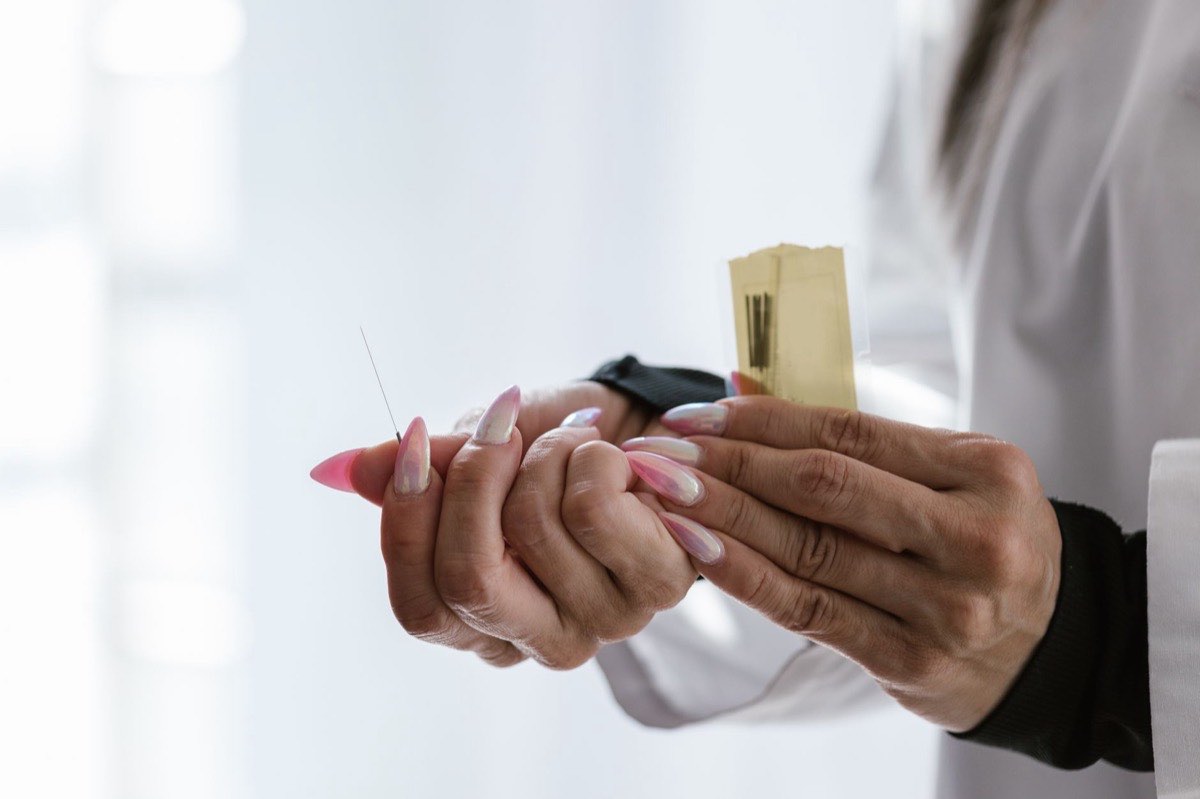
If you’ve got a stubborn knot in your neck, shoulder, or calf that won’t release no matter how much you stretch or foam-roll, someone has probably suggested dry needling. And then you went online, saw the word “needle,” and got nervous. Is it actually safe? Will it hurt? What happens to your body afterward? Those are fair questions, and the honest answer is reassuring, as long as the person holding the needle is properly trained.
I’m Dr. Jamie Pribyl, a doctor of physical therapy with manual therapy certification (MTC), and I use dry needling regularly at Healing Hands Physical Therapy and Bodywork in Reno. Here’s what it is, why it’s considered safe, the side effects you should genuinely expect, and what a visit looks like when it’s done right.
What dry needling actually is (and what it isn’t)
Dry needling uses a thin, sterile, single-use filament needle, the same kind used in acupuncture, but that’s where the resemblance ends. The needle is “dry” because nothing is injected through it: no medication, no cortisone, no fluid. It’s inserted directly into a tight band of muscle called a trigger point: the technical name for what you’d call a knot.
The American Physical Therapy Association’s consumer site, ChoosePT, draws the distinction clearly:
“Dry needling is not acupuncture. Acupuncture is based on traditional Chinese medicine and can only be performed by acupuncturists. Dry needling is modern Western medicine and is supported by evidence-based research.”
: Chase Kuhn, PT, DPT, ChoosePT.com (APTA)
So this isn’t an ancient energy practice, it’s a targeted musculoskeletal tool grounded in anatomy and research.
How it releases muscle trigger points
A trigger point is a small, contracted patch of muscle fibers that won’t let go. It refers pain elsewhere (a knot in your shoulder blade can light up your neck or arm), limits range of motion, and feeds a frustrating cycle: the tighter the muscle, the less blood flow reaches it, and the less blood flow, the tighter it stays.
The needle interrupts that loop. As Cleveland Clinic explains, “Stimulating a trigger point with a needle helps draw normal blood supply back to flush out the area and release tension.” Often the muscle responds with a brief, involuntary twitch: a quick flicker most patients can feel. That twitch is a good sign: it means the trigger point released. Cleveland Clinic adds that “the prick sensation can also fire off nerve fibers that stimulate your brain to release endorphins, your body’s homemade pain medication,” which is part of why people often feel looser within a day or two.
For general musculoskeletal complaints (a tight calf that aggravates plantar fasciitis, a knotted upper trap from desk work, a hip that won’t loosen for runners) dry needling can reach tissue that hands and stretching alone simply can’t.
Is dry needling safe?
For the vast majority of people, yes. Cleveland Clinic puts it plainly:
“The procedure is inexpensive and generally considered safe. It carries a low risk of complications if performed by a trained provider.”
The phrase “trained provider” is doing the heavy lifting there. Dry needling is safe because of who performs it and how. ChoosePT notes that “physical therapists wear gloves and take multiple safety precautions when dry needling. The needles are disposed of in a medical sharps collector.” A peer-reviewed clinical commentary in the International Journal of Sports Physical Therapy similarly describes it as “a safe, inexpensive, and minimally invasive procedure that carries a low risk.”
That said, dry needling isn’t for everyone in every moment. There are real contraindications and precautions, needle phobia, active local infection, certain vascular conditions, and the first trimester of pregnancy among them. A proper evaluation screens for these before a needle ever comes out, which is exactly why this should be done by a licensed clinician, not improvised.
The side effects you should actually expect
Here’s where honesty matters. Dry needling has side effects, they’re just usually mild and short-lived. The most common one is simple: soreness. As Cleveland Clinic notes, “The most common side effect of dry needling is soreness during and after treatment.”
What to expect:
- During treatment: “you may feel muscle soreness or twitching. These sensations are normal and a sign that your muscles are responding to the treatment.”
- Afterward: “You may experience increased muscle soreness after the treatment but it’s important to keep moving. This is normal and may last for 24 to 36 hours.”
- At the skin: minor bruising or a small spot of bleeding where the needle entered, especially near small surface vessels. This is cosmetic and fades on its own.
Less commonly, people feel briefly lightheaded, drowsy, or fatigued right after, which is why I never rush you out the door. Serious adverse events are rare when treatment is performed by a trained physical therapist who knows the underlying anatomy.
My honest framing for patients: expect to feel like you had a tough workout in that muscle for a day or so. Drink water, keep gently moving, and that soreness usually trades itself for noticeably better mobility.
What a concierge dry needling visit looks like at Healing Hands
This is where a cash-pay, one-on-one practice changes the experience. In a busy insurance clinic, needling is often a rushed add-on squeezed between other patients. That’s not how we work.
Your visit is a full hour, one-on-one with me: no aides, no handoffs. We start by talking through your symptoms and movement, then I assess by hand to find which trigger points drive your pain. Dry needling is rarely the whole plan; I pair it with the manual therapy I’m certified in (joint mobilization, soft-tissue work, and myofascial release) so we treat the cause, not just the knot. Because I watch your response in real time, I can adjust depth, dose, and which muscles we target on the spot, and stop the moment a muscle has had enough.
You’ll leave knowing what you felt, why, and what to do over the next 24 to 36 hours to get the most from it. If you’re local, you can learn more about how we serve patients across the region on our Reno area page, or read the full breakdown of the technique on our dry needling service page.
The cash-pay value
Healing Hands is an out-of-network, cash-pay practice, and for a treatment like dry needling, that model genuinely pays off. You get a full uninterrupted hour with a doctor of physical therapy, not a fraction of one shared across a packed schedule. No surprise insurance denials, no “we’ve used up your visits” letters, and no protocol dictated by a payer. You pay a clear, predictable rate and get focused, skilled hands-on care chosen for your body that day. Most patients find that a few well-targeted, unhurried sessions beat a long string of rushed ones, both for their results and their wallet.
Frequently Asked Questions
Does dry needling hurt? Most people feel a small prick on insertion and a brief cramp or twitch when a trigger point releases. It’s quick and very different from sustained pain. The more noticeable sensation is the muscle soreness afterward, similar to post-workout achiness, that typically lasts 24 to 36 hours.
How is dry needling different from acupuncture? They use similar needles but come from completely different systems. Acupuncture is rooted in traditional Chinese medicine and performed by acupuncturists; dry needling is a Western, evidence-based technique that physical therapists use to release muscular trigger points and improve movement.
How long do the side effects last? The main side effect (muscle soreness) generally resolves within 24 to 36 hours. Minor bruising at the needle site may take a few days to fade. Staying hydrated and gently moving the area helps you recover faster.
Who should not get dry needling? Anyone with a true needle phobia, an active local skin infection, certain vascular conditions, or who is in the first trimester of pregnancy should hold off. That’s why I screen for precautions during your evaluation before treating.
How soon will I feel relief? Some patients feel looser within hours; for others it takes a day as the post-treatment soreness settles. Because endorphins and restored blood flow are part of the mechanism, improvement in mobility and pain often shows up within 24 to 48 hours.
Ready to release that knot?
If muscle tightness or trigger-point pain has been holding you back, dry needling done by a trained physical therapist is a safe, effective option worth exploring. Call Healing Hands Physical Therapy and Bodywork in Reno at (775) 452-4471 to ask questions or book your full-hour, one-on-one session. We’ll figure out whether dry needling is right for you, and treat the whole problem, not just the symptom.