Dry Needling for Shoulder Pain in Reno: Releasing the Trigger Points Behind It
Shoulder pain in Reno? Learn how dry needling releases muscle trigger points behind aching shoulders, plus what a one-on-one concierge PT visit looks like.
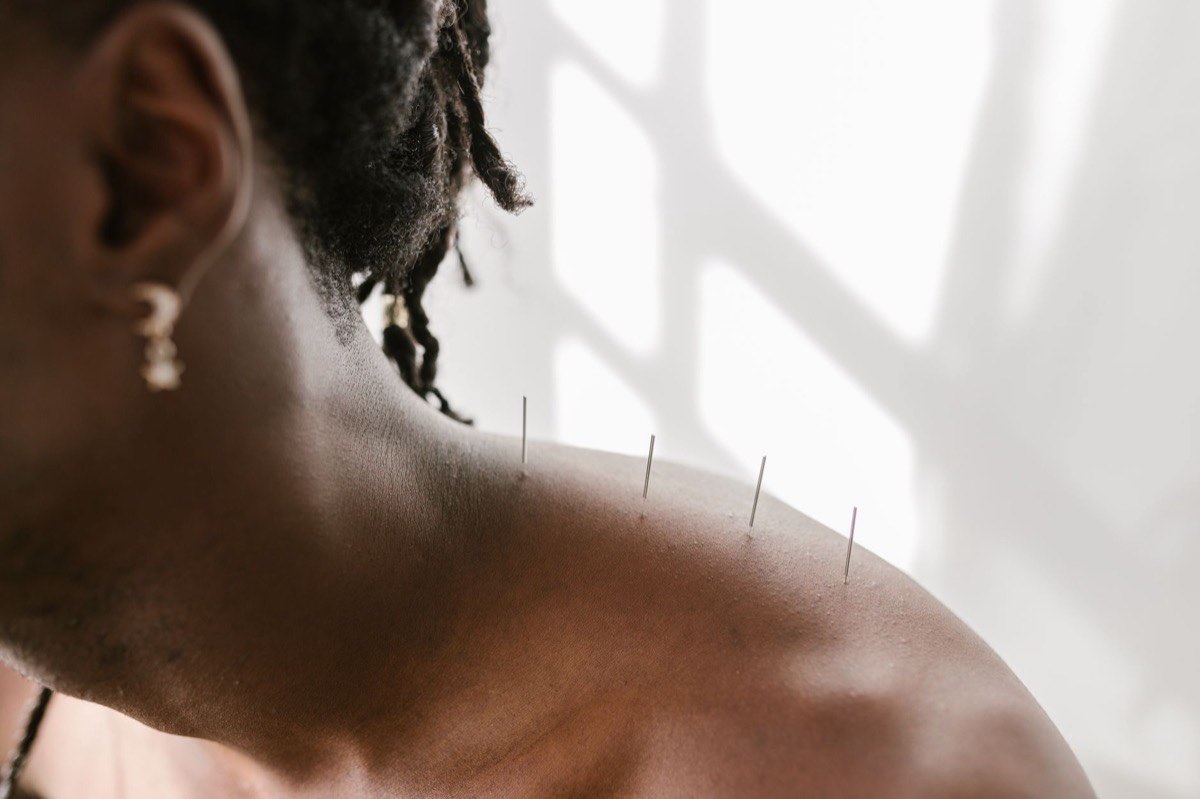
It usually starts as a nag. Reaching into the back seat, lifting a bag of groceries, or sleeping on the wrong side leaves your shoulder sore and stiff, and instead of fading, it lingers. Some mornings you can’t raise your arm overhead without a catch. Some nights the ache wakes you up. You’ve tried rest, ice, and ibuprofen, and the shoulder is still running your week. If that sounds familiar, there’s a good chance part of the problem isn’t just the joint itself, it’s the irritable muscle knots feeding the pain, and those respond remarkably well to a focused tool we use here in Reno: dry needling.
At Healing Hands Physical Therapy and Bodywork, dry needling is one of the most effective ways we have to quiet down an angry shoulder and get your arm moving again. Here’s what’s actually going on in a painful shoulder, how dry needling targets the trigger points behind it, and what a one-on-one concierge visit looks like.
Why shoulders hurt, and where trigger points fit in
The shoulder is the most mobile joint in the body, which also makes it one of the most easily overloaded. A very common driver of shoulder pain is irritation of the rotator cuff, the group of muscles and tendons that move and stabilize the joint. According to the American Academy of Orthopaedic Surgeons’ OrthoInfo, people are especially at risk when they do repetitive overhead work:
“Young athletes who use their arms overhead for swimming, baseball, tennis, and volleyball are particularly at risk. People who do repetitive lifting or overhead activities using the arm, such as paper hanging, construction, or painting are also at risk.”
When a muscle is overloaded (by overhead sports, a desk-and-mouse posture, an old injury, or plain stress) it can develop myofascial trigger points: tight, tender bands within the muscle that hurt when pressed and often refer pain elsewhere. In the shoulder, trigger points in the rotator cuff (especially the infraspinatus), the upper trapezius, and the muscles around the shoulder blade are frequent culprits. They can mimic or worsen “joint” pain, limit your range of motion, and keep the whole region locked in a guarded state. Treating the joint without addressing those knots is like changing a tire without checking why it keeps going flat.
What dry needling actually does
Dry needling uses a very thin, sterile filiform needle, the same kind of solid needle used in acupuncture, but applied through a completely different, modern Western framework based on anatomy and neuromuscular science. It is not acupuncture, and it has nothing to do with energy meridians. The American Physical Therapy Association’s patient resource, ChoosePT, puts the definition plainly:
“Dry needling is a technique physical therapists use (where allowed by state law) to treat pain and movement impairments. … Dry needling can inactivate trigger points to relieve pain or improve range of motion.”
In practical terms: I locate the trigger point (the small, highly sensitive spot in the muscle that reproduces your pain) and insert a thin needle directly into that taut band. Often the muscle responds with a brief, involuntary twitch (a “local twitch response”). That twitch is the goal: it helps the overactive band reset, reduces the chemical irritants that build up in a knotted muscle, and improves blood flow. The result is usually less pain, looser muscle, and more range of motion, often within a session or two.
How dry needling helps a painful shoulder specifically
For the shoulder, the best-documented benefit of dry needling is short-term relief of myofascial trigger-point pain: exactly the window you need to start moving and exercising again without fighting through a wall of pain. A randomized clinical trial on the infraspinatus muscle in older adults with nonspecific shoulder pain found that needling its trigger points produced a statistically significant reduction in pain intensity in the short term. The evidence is honest about its limits, too: another randomized trial in the Journal of Orthopaedic & Sports Physical Therapy found that adding dry needling on top of individualized, evidence-based physical therapy did not produce extra benefit over the physical therapy alone. The takeaway isn’t that needling doesn’t work, it’s that it works best as one tool inside a complete plan, not as a stand-alone fix.
That’s why I almost never use dry needling on its own. I use it to open a window, to drop the pain enough that the rest of the visit (hands-on manual therapy and bodywork, joint mobilization, and targeted strengthening for the rotator cuff and shoulder blade) can do its job. The needling quiets the alarm; the manual work and exercise fix the underlying loading problem so the pain doesn’t keep coming back.
What a concierge dry needling visit looks like at Healing Hands
If you’ve had dry needling rushed into a 15-minute slot at a busy clinic, this will feel different. Here, every visit is a full hour, one-on-one, with the same doctor of physical therapy (me) start to finish. No handoff to an aide, no shared attention.
A typical shoulder session looks like this:
- Assessment. We talk through your history and watch how your shoulder actually moves, overhead reach, behind-the-back, the positions that bite. I palpate to find the specific trigger points reproducing your pain.
- Dry needling. I needle the involved muscles (often the rotator cuff, upper trapezius, and the muscles around the shoulder blade) aiming for that local twitch response and a release in the taut band.
- Hands-on follow-through. While the muscle is freshly released, I layer in manual therapy: soft-tissue work, myofascial release, and joint mobilization to restore glide.
- Movement that sticks. We finish with a few precise, individualized exercises so the gains hold between visits, not a generic handout.
Because the hour is yours, I can adjust in real time, combine techniques, and explain exactly what I’m doing and why. You can learn more about the technique on our dry needling services page, and about serving patients across the region on our Reno area page.
Is it for you? A clear, cash-pay value
Healing Hands is a cash-pay, out-of-network concierge practice, and that’s a deliberate choice. By stepping outside insurance contracts, I’m not limited to what a payer deems “medically necessary” or how many minutes you’re allotted. You get the full hour, the right combination of tools, and direct access to a doctor of physical therapy with manual-therapy certification (MTC), not a protocol set by an insurer.
For many people with stubborn shoulder pain, that focused hour means fewer total visits than the drawn-out, twice-a-week-for-months model, which often makes concierge care comparable, or even less expensive, once you add up the whole episode. And there’s no surprise billing: you know the cost up front.
If your shoulder has been holding you back in Reno, Incline Village, or anywhere around the Tahoe area, let’s find out what’s really driving it. Call (775) 452-4471 to schedule a one-on-one evaluation, and let’s get your arm (and your sleep) back.
Frequently Asked Questions
Does dry needling for shoulder pain hurt? Most people feel a small pinch on insertion and then a brief, deep ache or cramp when the muscle twitches, that twitch is exactly what we want. It’s quick, and the soreness afterward is usually mild and fades within a day or two, much like after a good workout.
Is dry needling the same as acupuncture? No. They use a similar thin needle, but the reasoning is entirely different. Dry needling is a Western, anatomy-based technique aimed at deactivating muscle trigger points to relieve pain and restore movement, not balancing energy along meridians.
How many sessions will I need for my shoulder? It depends on how long the pain has been there and what’s driving it, but many patients notice meaningful relief within the first one to three visits. Because dry needling works best paired with manual therapy and targeted exercise, we build a short, individualized plan rather than open-ended visits.
Will my insurance cover dry needling here? Healing Hands is an out-of-network, cash-pay practice, so payment is direct and transparent. Many patients find that the full-hour, one-on-one model means fewer total visits, which can make the overall episode cost comparable to (or less than) traditional insurance PT.
Is dry needling safe? In the hands of a trained, licensed physical therapist using single-use sterile needles, dry needling has a strong safety record. We screen for anything that would make it inappropriate for you and explain the whole process before we begin.
Sources
- Dry Needling by a Physical Therapist: What You Should Know: ChoosePT.com (American Physical Therapy Association)
- Shoulder Impingement / Rotator Cuff Tendinitis: OrthoInfo, American Academy of Orthopaedic Surgeons
- Contribution of Dry Needling to Individualized Physical Therapy Treatment of Shoulder Pain: A Randomized Clinical Trial, Journal of Orthopaedic & Sports Physical Therapy (PubMed)
- Dry Needling on the Infraspinatus Latent and Active Myofascial Trigger Points in Older Adults With Nonspecific Shoulder Pain: A Randomized Clinical Trial, PubMed
- Dry Needling | American Physical Therapy Association